Published on: October 12, 2026
Updated on: October 12, 2026
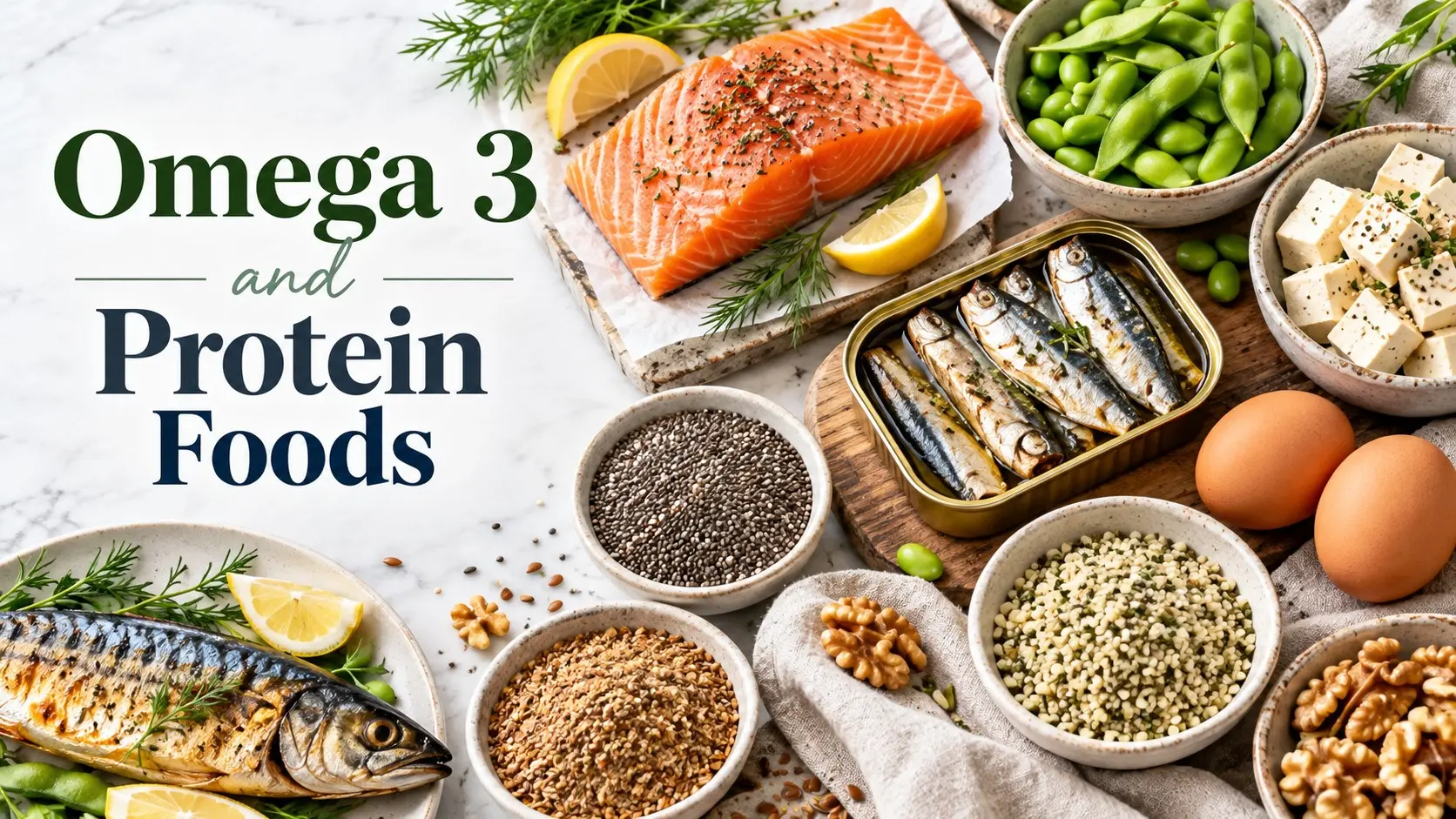
Omega 3 and protein foods are easiest to find in fatty fish. Salmon, sardines, Atlantic mackerel, herring, trout, and anchovies give you high quality protein plus EPA and DHA. Plant foods such as chia, flax, walnuts, soybeans, tofu, and hemp add ALA plus protein, but they do not provide EPA and DHA in the same amounts as oily fish.
That difference matters.
A food can be excellent for omega 3 and still be only a modest protein source. Chia seeds are a good example. They contain a lot of ALA, yet you would not normally use chia as the main protein on your dinner plate.
Salmon is different. It does both jobs well.
This article is for general information and education. It does not replace medical advice, diagnosis, or treatment.
I am not a dermatologist or a doctor, and this content does not replace professional medical advice. What I share comes from real life experience, extensive research, and consultation with healthcare providers. Always consult qualified medical professionals for diagnosis and treatment of any health condition.
Medical review status: This article has not been independently medically reviewed by a physician, registered dietitian, cardiologist, sports dietitian, pharmacist, or other licensed healthcare professional.
Quick answer: If you eat seafood, salmon, sardines, Atlantic mackerel, herring, trout, and anchovies are the strongest foods for getting protein plus EPA and DHA together. If you eat plant based, combine protein rich soy foods with chia, ground flaxseed, walnuts, or hemp so the meal provides both protein and ALA.
Table of Contents
- Omega 3 and Protein Are Different Nutrients
- EPA, DHA, and ALA Explained
- 16 Smart Food Picks
- Salmon
- Sardines
- Atlantic Mackerel
- Herring
- Trout
- Anchovies
- Oysters
- Mussels
- Canned Light Tuna
- Omega 3 Enriched Eggs
- Edamame
- Tofu
- Chia Seeds
- Ground Flaxseed
- Hemp Seeds
- Walnuts
- Best Choices at a Glance
- How Much Omega 3 Do You Need?
- How Much Protein Do You Need?
- Best Plant Based Combinations
- Mercury and Fish Safety
- Muscle Building
- Weight Management
- Simple Meal Ideas
- Common Mistakes
- Frequently Asked Questions
- References and Sources
Omega 3 and Protein Are Doing Different Jobs
Protein and omega 3 fats are both useful, but they are not interchangeable.
Protein supplies amino acids your body uses to build and repair muscle, skin, enzymes, hormones, and other tissues.
Omega 3 fatty acids are fats. They form part of cell membranes and take part in signaling throughout the body.
The practical reason to look for foods containing both is simple. You can get two useful nutrients from one meal rather than treating omega 3 and protein as separate nutrition projects.
Fatty fish does this especially well.
EPA, DHA, and ALA Are Not the Same Omega 3
The phrase omega 3 describes a family of fats.
The three forms you will hear about most are:
- EPA, or eicosapentaenoic acid
- DHA, or docosahexaenoic acid
- ALA, or alpha linolenic acid
Fatty fish and seafood provide EPA and DHA directly.
Chia, flaxseed, walnuts, and soy mainly provide ALA.
Your body can convert some ALA into EPA and DHA, but the conversion is limited and varies between people. That is why five grams of ALA from chia should not be treated as nutritionally identical to five grams of EPA plus DHA from seafood.
This is where many food lists become misleading.
They rank foods by total omega 3 without telling you which type you are actually getting.
For a deeper guide to plant sources, see Vegan Omega 3.
16 Omega 3 and Protein Foods Worth Putting on Your List
1. Salmon Is the Best All Around Starting Point
If you want one food that does both jobs cleanly, start with salmon.
Salmon gives you:
- High quality protein
- EPA
- DHA
- Vitamin B12
- Selenium
- Vitamin D in many varieties
NIH data show that three ounces of cooked Atlantic salmon can provide roughly 1.6 to 1.8 grams of EPA plus DHA, depending on whether it is wild or farmed.
The exact amount varies. Fish feed, species, and preparation all affect the result.
For a simple meal, add salmon to potatoes or brown rice with a large serving of vegetables.
2. Sardines Give You a Lot From a Small Fish
Sardines are one of my favorite practical choices for this particular goal.
Why?
They provide protein, EPA, DHA, vitamin B12, selenium, and, when you eat the soft bones, calcium.
NIH lists about 1.19 grams of EPA plus DHA in a three ounce serving of canned sardines in tomato sauce.
Sardines are also among the lower mercury fish choices highlighted in U.S. fish guidance.
Try them on whole grain toast with tomato and lemon rather than treating them as a food you must eat straight from the can.
3. Atlantic Mackerel Is Excellent, but the Name Matters
Atlantic mackerel is rich in protein and long chain omega 3 fats.
NIH data list roughly one gram of EPA plus DHA in three ounces of cooked Atlantic mackerel.
There is an important catch.
Atlantic mackerel and king mackerel are not the same choice.
FDA advice places king mackerel among fish that should be avoided by people who are pregnant or breastfeeding and by young children because of mercury.
Atlantic mackerel is a lower mercury option.
Check the species name rather than seeing the word mackerel and assuming every type is equal.
4. Herring Is One of the Strongest EPA and DHA Foods
Herring gets less attention than salmon, which is a shame.
Three ounces of cooked Atlantic herring provides about 1.7 grams of EPA plus DHA in the NIH food table.
It also provides substantial protein.
Smoked and pickled herring can be high in sodium, so compare labels if you need to limit salt.
5. Trout Combines Lean Protein With Useful Omega 3
Trout is a strong choice when you want something milder than sardines or mackerel.
It provides complete protein plus EPA and DHA.
FDA guidance also includes trout among lower mercury options.
Bake or grill it with herbs and lemon. You do not need breading or heavy sauce to make it work.
6. Anchovies Pack Protein and Omega 3 Into a Small Portion
Anchovies are small, but nutritionally they are not minor.
They provide protein, EPA, and DHA, and they are included among lower mercury seafood choices.
The main issue is sodium.
A few anchovies can add flavor to:
- Tomato sauce
- Whole grain toast
- Salad
- Vegetable dishes
If sodium matters for you, compare brands and portions.
7. Oysters Give You Protein Plus Long Chain Omega 3
Oysters are more than a zinc food.
They provide high quality protein and contain EPA and DHA.
The American Heart Association includes oysters among fatty seafood choices that provide omega 3.
FDA also lists Pacific oysters among seafood that combines useful EPA and DHA with relatively low mercury.
Cook shellfish safely, especially during pregnancy or when immune function is reduced.
8. Mussels Are Another Useful Seafood Combination
Mussels deliver protein with EPA and DHA and can be a useful alternative for someone who does not enjoy oily fish.
They also provide vitamin B12 and minerals.
Preparation matters here too.
Steamed mussels are a different meal from mussels served with large amounts of butter, cream, or refined bread.
9. Canned Light Tuna Is Protein Dense With Some Omega 3
Tuna is extremely useful for protein.
Its omega 3 content is usually lower than salmon, sardines, herring, or Atlantic mackerel, but it still contributes EPA and DHA.
Canned light tuna is usually lower in mercury than albacore tuna.
If you eat tuna frequently, vary your seafood instead of making tuna your only fish.
This matters even more during pregnancy and for young children.
10. Omega 3 Enriched Eggs Combine Complete Protein With Added DHA
Regular eggs already provide complete protein.
Some hens are fed diets that increase the omega 3 content of their eggs.
NIH notes that certain brands of eggs are fortified with DHA and other omega 3 fats.
The amount is not standardized across every carton.
Read the package rather than assuming every “omega 3 egg” provides the same amount.
This is a useful option for someone who eats eggs but little fish.
11. Edamame Gives Plant Protein Plus ALA
Edamame is young soybean.
It is useful because soy provides one of the stronger plant protein packages while also contributing ALA.
You are still getting plant omega 3 rather than a fish sized serving of EPA and DHA.
That does not make edamame a poor choice.
It means the comparison should be accurate.
Add edamame to grain bowls, salads, soups, or stir fries.
12. Tofu Makes the Plant Based Side Much Easier
Tofu gives you useful plant protein from soy and contains some ALA.
Its strength is protein more than omega 3.
That makes tofu a perfect food to pair with a stronger ALA source.
For example:
- Tofu with a ground flax dressing
- Tofu bowl topped with walnuts
- Tofu with chia added to a sauce
If you eat vegetarian meals often, see High Protein Vegetarian Meals.
13. Chia Seeds Are Excellent for ALA but Only Moderate for Protein
This is where the food lists need context.
One ounce of chia seeds provides about 5.06 grams of ALA according to NIH.
That is a large amount of plant omega 3.
Chia also provides protein and fiber, but it is not as protein dense as fish, eggs, tofu, or edamame.
Use chia as a booster.
Add it to:
- Greek yogurt
- Soy yogurt
- Oatmeal
- Smoothies
- Overnight oats
Then the meal gets a stronger protein base plus ALA.
14. Ground Flaxseed Gives ALA With a Small Protein Bonus
NIH lists about 2.35 grams of ALA in one tablespoon of whole flaxseed.
Ground flax is usually easier to use in normal meals.
Unlike flaxseed oil, the whole ground seed also provides protein and fiber.
That distinction matters for this article.
Flaxseed oil is a strong ALA source, but it contributes no meaningful protein. Ground flax fits the “omega 3 and protein foods” goal better.
15. Hemp Seeds Add Protein With Some ALA
Hemp seeds are more protein dense than many nuts and seeds and contain ALA.
They also provide magnesium and other minerals.
The omega 3 content is lower than chia or flax in typical servings, so think of hemp as a protein rich seed with an omega 3 bonus.
Sprinkle it on yogurt, oats, salads, or grain bowls.
16. Walnuts Are the Best Known Nut for ALA
Walnuts are one of the few nuts that provide a meaningful amount of ALA.
NIH lists about 2.57 grams of ALA per ounce.
They also contribute protein, but a serving of walnuts is not as protein dense as seafood or soy foods.
Pair walnuts with:
- Greek yogurt
- Soy yogurt
- Oatmeal
- Edamame salad
- Whole grain cereal
That turns them into part of a better protein meal.
Best Choices at a Glance
| Food | Main Omega 3 | Protein Role | Best Use |
|---|---|---|---|
| Salmon | EPA and DHA | High | Best all around choice |
| Sardines | EPA and DHA | High | Budget friendly seafood |
| Atlantic mackerel | EPA and DHA | High | Rich oily fish choice |
| Herring | EPA and DHA | High | Very high long chain omega 3 |
| Trout | EPA and DHA | High | Mild lower mercury choice |
| Anchovies | EPA and DHA | High | Small servings with big flavor |
| Oysters | EPA and DHA | High | Seafood variety |
| Mussels | EPA and DHA | High | Alternative to oily fish |
| Canned light tuna | EPA and DHA | Very high | Convenient protein |
| Omega 3 enriched eggs | Usually DHA plus some ALA | High quality | Fish free breakfast option |
| Edamame | ALA | High for a plant food | Best plant combination |
| Tofu | ALA | High for a plant food | Main meal protein |
| Chia seeds | ALA | Moderate | Omega 3 booster |
| Ground flaxseed | ALA | Modest | Meal topper |
| Hemp seeds | ALA | Moderate | Protein rich seed |
| Walnuts | ALA | Moderate | Snack or meal topper |
Which Foods Are Truly High in Both Protein and Omega 3?
The clear winners are seafood.
If your goal is maximum protein plus meaningful EPA and DHA in the same serving, prioritize:
- Salmon
- Sardines
- Atlantic mackerel
- Herring
- Trout
- Anchovies
Oysters and mussels are useful too.
Tuna provides plenty of protein but usually less omega 3 than the fattier fish above.
Plant foods need a different strategy.
Edamame and tofu are stronger protein foods, while chia, flax, and walnuts are stronger ALA foods. Combining them creates a better meal than expecting one seed or nut to do everything.
How Much Omega 3 Do Adults Need?
There is a formal U.S. adequate intake for ALA, but not a single official daily target for EPA and DHA for healthy adults.
NIH lists adult ALA adequate intake at:
- 1.6 grams per day for adult men
- 1.1 grams per day for adult women
- 1.4 grams during pregnancy
- 1.3 grams during breastfeeding
Those numbers refer to ALA.
Do not add EPA and DHA grams to ALA grams and assume they are nutritionally identical.
For a food based approach, the American Heart Association recommends eating two servings of fish per week, especially fatty fish.
One AHA fish serving is about three ounces cooked.
How Much Protein Do You Need?
Protein needs depend on body size, age, training, pregnancy, health, and goals.
The standard adult Recommended Dietary Allowance is 0.8 grams of protein per kilogram of body weight per day.
That is a baseline requirement, not a universal muscle building target.
Older adults, athletes, and people recovering from some illnesses or injuries can need more.
People with kidney disease may need individualized advice rather than simply increasing protein because a fitness article told them to.
For muscle focused nutrition, see Best Nutrition for Muscle Building.
Can Plant Based Eaters Get Enough Omega 3 and Protein?
Yes, but build the meal on purpose.
The most useful pattern is:
Strong plant protein + strong ALA source.
Tofu Plus Ground Flax
Use tofu as the protein base and add ground flaxseed to a dressing or sauce.
Edamame Plus Chia
Edamame provides the stronger protein side. Chia adds much more ALA.
Soy Yogurt Plus Walnuts and Chia
Choose a higher protein soy yogurt, then add walnuts and chia.
Tofu Bowl Plus Hemp and Walnuts
This gives you soy protein, ALA, minerals, and a mix of textures.
For a broader vegetarian plan, see Vegetarian Diets Benefits.
Is ALA From Chia as Good as EPA and DHA From Fish?
ALA is useful and essential.
But no, it is not nutritionally identical to eating EPA and DHA directly.
Your body converts some ALA into EPA and DHA. The conversion is limited.
That is why someone who eats fish gets long chain omega 3 directly, while someone following a fully plant based diet relies more heavily on ALA and may consider an algae based EPA or DHA product if appropriate.
Supplements are a separate decision. Discuss them with a clinician or registered dietitian when pregnancy, medicines, bleeding risk, or a health condition is involved.
What About Mercury in High Protein Fish?
This should be part of the food list, not a footnote.
Fish provide protein, EPA, DHA, vitamins, and minerals, but mercury levels vary widely between species.
FDA and EPA guidance encourages choosing a variety of lower mercury fish.
Strong options include:
- Salmon
- Sardines
- Anchovies
- Atlantic mackerel
- Trout
- Oysters
If you are pregnant, might become pregnant, are breastfeeding, or are choosing fish for a young child, follow the current FDA fish chart carefully.
FDA advises people who are pregnant or breastfeeding to eat two to three servings each week from its Best Choices category.
Atlantic Mackerel and King Mackerel Are Not the Same
This detail is easy to miss.
Atlantic mackerel is a lower mercury choice.
King mackerel is on the FDA list of fish to avoid during pregnancy and for young children.
Check the species.
Are Omega 3 and Protein Foods Good for Building Muscle?
They can fit very well into a muscle building diet.
Protein supplies amino acids used to repair and build muscle tissue after training.
Fish, eggs, and soy are useful protein choices.
But eating omega 3 does not replace:
- Enough total protein
- Enough energy
- Progressive resistance training
- Recovery
- Sleep
Think of omega 3 rich protein foods as part of the meal pattern, not a muscle shortcut.
For more ideas, see High Protein Meals.
Are These Foods Useful for Weight Management?
Protein can make meals more satisfying, and seafood can provide substantial protein without the high saturated fat found in some fatty meats.
Seeds and walnuts need a little more attention.
They are nutrient rich, but they are also calorie dense.
An ounce of walnuts or a spoonful of seeds is useful.
A huge handful eaten without noticing the portion is a different meal.
If weight management is your goal, use nuts and seeds as nutrient boosters rather than unlimited snacks.
See High Protein Foods for Weight Loss for a broader guide.
What Are the Best Omega 3 and Protein Foods for Breakfast?
Breakfast is where plant combinations work especially well.
Greek Yogurt With Chia and Walnuts
The yogurt supplies most of the protein. Chia and walnuts add ALA.
Omega 3 Enriched Eggs With Whole Grain Toast
Eggs give complete protein, while fortified eggs can add DHA.
Soy Yogurt With Chia, Flax, and Berries
This works for a plant based breakfast if the yogurt contains meaningful protein.
Smoked Salmon With Eggs
This gives a strong protein meal with EPA and DHA.
Smoked salmon can contain a lot of sodium, so portion and frequency matter if you need to limit salt.
What Are the Easiest Lunch and Dinner Ideas?
Salmon Grain Bowl
Use salmon, quinoa or brown rice, vegetables, and a lemon dressing.
Sardine Toast
Top whole grain toast with sardines, tomato, herbs, and lemon.
Trout With Potatoes and Greens
Simple food works here. The fish already gives you the protein and long chain omega 3.
Edamame Tofu Bowl
Use tofu and edamame as the main protein, then add chia or ground flax to the dressing.
Walnut Tofu Stir Fry
Tofu supplies the main protein. Walnuts add ALA and texture.
Foods People Mistake for Strong Dual Sources
Flaxseed Oil
It is rich in ALA.
It has virtually no protein.
For this specific goal, ground flaxseed makes more sense.
Fish Oil
Fish oil gives EPA and DHA.
It does not give you the protein and other nutrients you get from eating fish.
Avocado
Avocado contains healthy unsaturated fat, but it is neither a major omega 3 source nor a high protein food.
Chicken Breast
Chicken is an excellent protein food.
It contains only small amounts of omega 3 compared with oily fish.
Almonds
Almonds contain protein and healthy fat, but walnuts are the stronger nut choice when ALA is the target.
Common Mistakes to Avoid
Treating All Omega 3 Grams as Equal
ALA, EPA, and DHA are related, but they are not interchangeable numbers.
Calling Seeds High Protein Without Context
Seeds contain protein.
That does not make two tablespoons of chia equivalent to a serving of fish or tofu for protein.
Eating Only Tuna
Tuna is convenient, but variety gives you different nutrients and can help manage mercury exposure.
Choosing King Mackerel Because You Read That Mackerel Is Healthy
Species matters.
Choose Atlantic mackerel when you want the lower mercury oily fish option.
Buying Omega 3 Eggs Without Reading the Label
Fortification varies.
Check how much omega 3 the carton actually lists.
Thinking More Protein Is Always Better
Protein needs are individual.
A very high protein diet is not automatically healthier and may need adjustment if you have kidney disease or another medical condition.
A Simple Weekly Strategy
If you eat seafood, you do not need to micromanage every meal.
A practical week might include:
- Salmon once
- Sardines, trout, herring, or Atlantic mackerel once
- Eggs or soy foods on other days
- Chia, ground flaxseed, or walnuts added to breakfast or snacks
That gives you variety instead of depending on one “superfood.”
The American Heart Association recommends two servings of fish per week, especially fatty fish, as part of a heart healthy eating pattern.
For broader eating habits, visit the Healthy Eating Lifestyle Hub.
Conclusion
Omega 3 and protein foods are most efficient when the same food genuinely delivers both nutrients.
For people who eat seafood, salmon, sardines, Atlantic mackerel, herring, trout, and anchovies are the strongest place to start.
For plant based eating, stop expecting one seed to do everything. Build the meal around tofu, edamame, or another strong protein food, then add chia, ground flaxseed, walnuts, or hemp for ALA.
Your next step is easy: pick one seafood meal or one plant based pairing from this guide and add it to your next grocery list.
References and Sources
- National Institutes of Health Office of Dietary Supplements. Omega 3 Fatty Acids: Fact Sheet for Health Professionals.
https://ods.od.nih.gov/factsheets/Omega3FattyAcids-HealthProfessional/ - National Institutes of Health Office of Dietary Supplements. Omega 3 Fatty Acids: Consumer Fact Sheet.
https://ods.od.nih.gov/factsheets/Omega3FattyAcids-Consumer/ - American Heart Association. Fish and Omega 3 Fatty Acids.
https://www.heart.org/en/healthy-living/healthy-eating/eat-smart/fats/fish-and-omega-3-fatty-acids - American Heart Association. Picking Healthy Proteins.
https://www.heart.org/en/healthy-living/healthy-eating/eat-smart/nutrition-basics/picking-healthy-proteins - U.S. Food and Drug Administration. Questions and Answers From the FDA and EPA Advice About Eating Fish.
https://www.fda.gov/food/consumers/questions-answers-fdaepa-advice-about-eating-fish-those-who-might-become-or-are-pregnant-or - Dietary Guidelines for Americans. Scientific Foundation for the 2025 to 2030 Guidelines.
https://cdn.realfood.gov/Scientific%20Report_508.pdf - USDA. FoodData Central.
https://fdc.nal.usda.gov/ - NHS. Fish and Shellfish.
https://www.nhs.uk/live-well/eat-well/food-types/fish-and-shellfish-nutrition/
Internal Links + Hub
- Foods and Nutrition Hub
- Healthy Eating Lifestyle Hub
- Omega 3 Benefits for Women
- Vegan Omega 3
- Omega 3 Fatty Acids and Eye Health
- Omega 3 6 9 Benefits
- High Protein Vegetarian Meals
- High Protein Foods for Weight Loss
- High Protein Meals
- Best Nutrition for Muscle Building
- Vegetarian Diets Benefits
- Mediterranean Diet and Heart Health
About the Author
Adel Galal is the Founder and Lead Writer of NextFitLife.com.
Adel has maintained a personal interest in health, fitness, nutrition, sleep, wellness, and healthy aging for more than 30 years. His health and wellness writing experience spans more than 15 years.
His approach is to compare nutrition claims with current guidance, separate foods that genuinely provide a nutrient from foods that are simply marketed around it, and turn technical nutrition details into choices readers can use at the grocery store and at home.
For this guide, that means treating protein, EPA, DHA, and ALA as separate nutrition questions instead of placing every “omega 3 food” in one undifferentiated list.
Adel is not a physician, registered dietitian, sports dietitian, cardiologist, pharmacist, or other licensed healthcare professional. NextFitLife content is educational and does not replace diagnosis, medical nutrition therapy, prescribed treatment, or individualized dietary care.
Learn more about Adel and NextFitLife on the About Us page.
Frequently Asked Questions
What are the best omega 3 and protein foods?
Salmon, sardines, Atlantic mackerel, herring, trout, and anchovies are among the strongest choices because they provide high quality protein plus EPA and DHA in the same food.
Which food has the most protein and omega 3 together?
Fatty fish offers the strongest overall combination. Salmon is a particularly practical choice because it provides substantial protein along with useful amounts of EPA and DHA.
Which plant foods contain both omega 3 and protein?
Edamame, tofu, chia seeds, ground flaxseed, hemp seeds, and walnuts contain both. Soy foods are usually stronger protein sources, while chia and flax are stronger ALA sources.
Are chia seeds a high protein food?
Chia seeds contain protein, but they are not as protein dense as fish, eggs, tofu, or edamame in a normal serving. They are better used as an ALA rich addition to a higher protein meal.
Is salmon high in omega 3 and protein?
Yes. Salmon provides high quality complete protein and is one of the strongest common food sources of EPA and DHA.
Are sardines good for protein and omega 3?
Yes. Sardines provide substantial protein and EPA plus DHA. They are also among the lower mercury seafood choices and canned sardines with bones provide calcium.
Is tuna a good omega 3 and protein food?
Tuna is very protein rich and contributes EPA and DHA, but most tuna contains less omega 3 than salmon, sardines, herring, or Atlantic mackerel. Mercury also varies by tuna species.
Are walnuts a protein and omega 3 food?
Walnuts provide ALA and some protein. They are a useful snack or meal addition, but they are less protein dense than seafood, eggs, or soy foods.
What is the difference between ALA and EPA plus DHA?
ALA is the main plant form of omega 3. EPA and DHA are long chain omega 3 fats found mainly in seafood. The body converts some ALA into EPA and DHA, but the conversion is limited.
How much fish should I eat for omega 3?
The American Heart Association recommends two servings of fish per week, especially fatty fish. A serving is about three ounces cooked.
What are good vegetarian omega 3 and protein meals?
Useful combinations include tofu with ground flax dressing, edamame with chia, soy yogurt with walnuts and chia, or tofu bowls topped with hemp seeds and walnuts.
Is Atlantic mackerel safe to eat?
Atlantic mackerel is considered a lower mercury choice. Do not confuse it with king mackerel, which FDA advises pregnant people and young children to avoid because of higher mercury levels.
Do omega 3 enriched eggs contain protein?
Yes. Eggs provide complete protein. Omega 3 enriched eggs can also supply DHA or additional ALA, but the amount varies by brand, so check the package.
Do I need omega 3 supplements if I eat fish?
Not automatically. Many people can obtain omega 3 from food. Supplements may be recommended for specific medical situations, but the dose and type should be discussed with a healthcare professional.

Health & wellness writer with 30+ years of experience in nutrition, fitness, and healthy aging. Founder of NextFitLife.com — evidence-based health guidance.