
Published on:
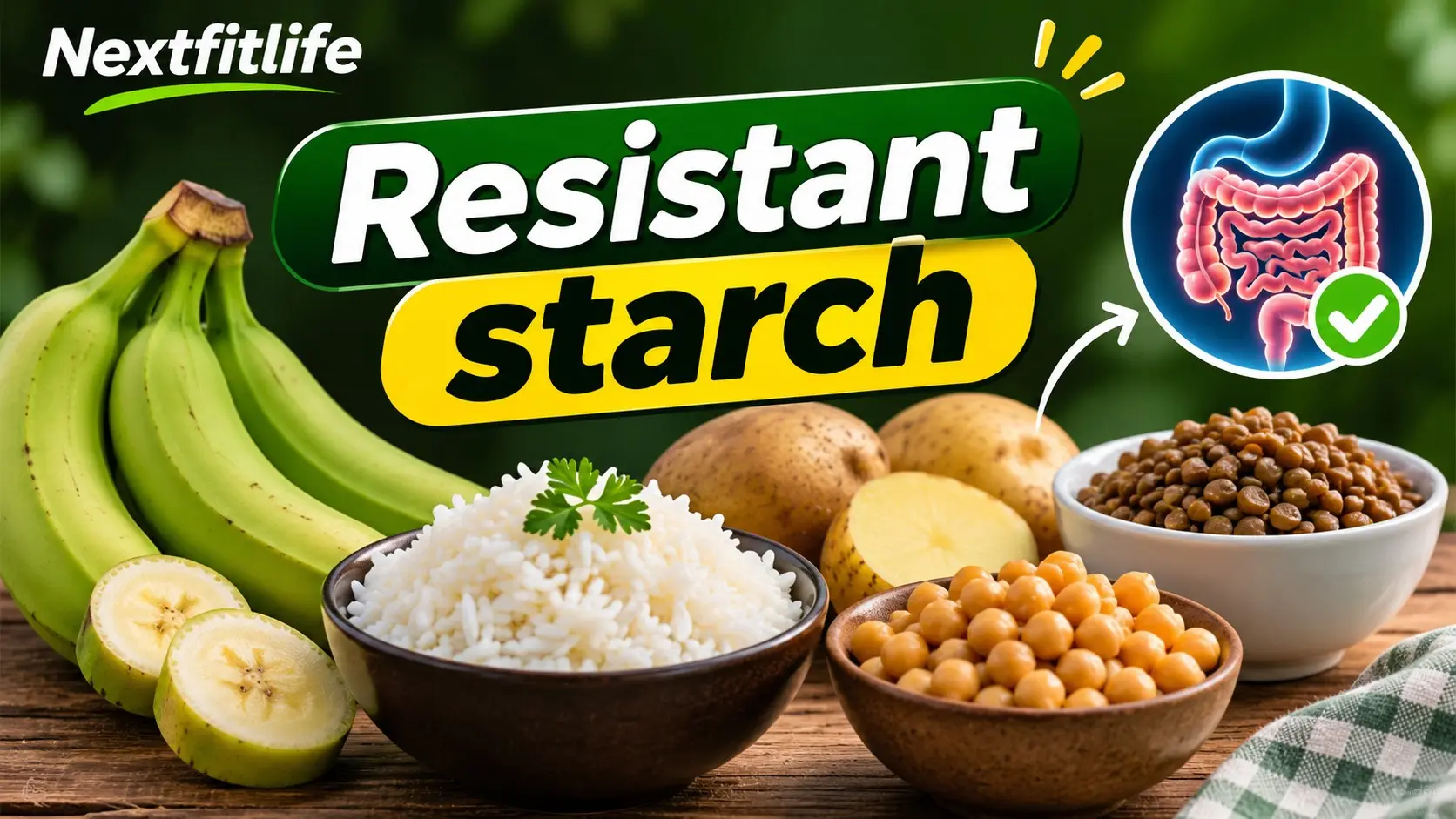
Resistant starch is starch that is not fully broken down in the small intestine. Some reaches the large intestine, where gut bacteria can ferment it.
You can get resistant starch naturally from foods such as beans, lentils, whole grains, oats, green bananas, and plantains. Another type can form when foods such as rice, potatoes, or pasta are cooked and then cooled.
Quick answer: Resistant starch is a form of starch that resists normal digestion. Some foods contain it naturally, while cooling certain cooked starches can create more. It may support gut bacteria and reduce the glucose response to some meals, but cooling does not remove all digestible carbohydrate or make a food low carb.
This article is for general information and education. It does not replace medical advice, diagnosis, treatment, or personalized nutrition advice.
Important if you use insulin: changing how starch is cooked and cooled can change the glucose response to a meal. One study in people with type 1 diabetes found more hypoglycemia after cooled and reheated rice when the same insulin dose was used. Do not change insulin or diabetes medicine based on the cook and cool method without guidance from your diabetes care team.
For a broader look at fiber, digestion, and food choices, visit the NextFitLife Gut Health Foods Hub or the main Foods and Nutrition Hub.
Table of Contents
- What resistant starch is
- How it differs from regular starch
- Types of resistant starch
- 9 smart facts
- Best resistant starch foods
- What cooking does to starch
- Why cooling changes starch
- Can you reheat cooled starch?
- Rice, potatoes, pasta, oats, and beans
- Gut health and fermentation
- Blood sugar effects
- Weight loss claims
- Gas and bloating
- Food safety when cooling carbs
- A simple cook and cool method
- Common mistakes
- Conclusion
- References and Sources
- Internal Links and NextFitLife Hubs
- About the Author
- Frequently Asked Questions
What Is Resistant Starch?
Most starch is broken into glucose as it travels through the small intestine.
Resistant starch behaves differently. Its structure makes at least some of it harder for digestive enzymes to break apart.
That means a portion can pass into the large intestine.
There, gut bacteria can ferment it.
Harvard's Nutrition Source includes resistant starch among fermentable carbohydrate sources that can act as a prebiotic. Foods listed include legumes, unripe bananas, and cooked and cooled potatoes and pasta.
The word “resistant” does not mean the starch is bad for you. It means it resists digestion more than ordinary starch.
How Is Resistant Starch Different From Regular Starch?
Think about the difference in where digestion happens.
Regular digestible starch is broken down mainly in the small intestine. Glucose is then absorbed into the blood.
Resistant starch escapes part of that process.
Once it reaches the colon, bacteria can use it as a food source.
That makes resistant starch behave more like a fermentable fiber than ordinary rapidly digested starch.
It is still part of a carbohydrate food, though.
Do not confuse the two ideas: a food can contain more resistant starch and still contain plenty of digestible carbohydrate.
What Are the Types of Resistant Starch?
Resistant starch is usually divided into several types.
| Type | What Makes It Resistant | Food Examples |
|---|---|---|
| RS1 | Starch is physically trapped inside plant structure | Whole or partly milled grains, seeds, legumes |
| RS2 | Natural starch granules have a structure that resists digestion | Green banana, plantain, some high-amylose starches |
| RS3 | Cooked starch reorganizes after cooling | Cooked and cooled rice, potatoes, pasta, some grains |
| RS4 | Starch is modified during food manufacturing | Some commercial high-fiber foods and processed ingredients |
You may also see RS5 discussed in scientific literature. This involves complexes between starch and fats.
For everyday meal planning, RS1, RS2, and RS3 are the types most useful to understand.
9 Smart Facts About Resistant Starch
1. Beans and Lentils Are an Easy Place to Start
You do not need a laboratory-style cook and cool routine to eat resistant starch.
Beans, peas, and lentils naturally contain resistant starch along with ordinary dietary fiber, plant protein, minerals, and other nutrients.
That makes legumes one of the most practical choices because the benefit does not depend on turning leftovers into a food experiment.
If gut health is your goal, whole foods usually give you more than one useful nutrient at the same time.
2. Green Bananas Have More Resistant Starch Than Ripe Bananas
Banana ripening changes its carbohydrate structure.
A firm green banana contains more starch. As the banana ripens, more of that starch is converted into sugars.
That is why green or less ripe bananas are often listed as a source of RS2 resistant starch.
You do not need to force yourself to eat a very unripe banana if you dislike the taste. Beans, grains, or cooled starches are other options.
3. Cooking Can Reduce Some Natural Resistant Starch
Heat and water can open the structure of starch granules.
This process is called gelatinization.
It usually makes starch easier for digestive enzymes to reach.
That means cooking can reduce some of the natural RS2 found in foods such as green bananas, plantains, or raw starches.
Cooking is still useful and often necessary. The point is simply that heat changes starch structure.
4. Cooling Can Create a Different Resistant Starch
This is the part that gets the most attention online.
After some starches are cooked, cooling lets parts of the starch molecules move back together into a more ordered structure.
This is called retrogradation.
The resistant starch formed this way is called RS3.
Rice, potatoes, pasta, and some other starches can develop more RS3 during cooling.
5. The Amount Created by Cooling Is Not the Same in Every Food
This is where simple social media rules fall apart.
Different rice varieties can produce different amounts of resistant starch.
Different potatoes do too.
The starch's amylose content, cooking method, storage temperature, storage time, food structure, and reheating can all change the result.
A study comparing white rice varieties found large differences in resistant starch depending on the variety and cooking method.
So there is no one number that describes every bowl of chilled rice.
6. Reheating Does Not Always Remove All of the Resistant Starch
You do not necessarily need to eat every cooled potato or bowl of rice cold.
Some of the structure formed during cooling can remain after reheating.
Research on rice has shown that cooked, cooled, and reheated rice can still have a different starch profile and glycemic response from freshly cooked rice.
The effect depends on the food and how it is reheated.
So the useful message is not “reheating destroys resistant starch.”
It is: some resistant starch can remain, but the amount varies.
7. Resistant Starch Can Feed Gut Bacteria
When resistant starch reaches the large intestine, bacteria can ferment it.
Fermentation can produce compounds called short-chain fatty acids.
One of these is butyrate, which is used by cells lining the colon.
This is one reason resistant starch is often described as a prebiotic.
A prebiotic is a substance used by beneficial gut microbes.
That does not mean resistant starch is the only way to support the gut. A varied diet rich in different plant fibers matters too.
See the Gut Health Foods Guide for a broader approach.
8. It Can Lower the Glucose Response to Some Meals
Several studies show that higher resistant starch content can reduce the glucose response in certain meals.
For example, a small study in people with type 1 diabetes compared freshly cooked rice with rice cooled for 24 hours and reheated.
The cooled rice produced a smaller rise in blood glucose.
However, it also produced more episodes of low blood sugar when the participants used the same insulin dose.
That is a strong reminder that “lower glucose response” is not automatically better for a person using insulin.
9. Resistant Starch Is Useful, but It Is Not a Metabolic Shortcut
Cooling a potato does not make the carbohydrate disappear.
Refrigerating rice does not make it calorie free.
And eating resistant starch does not cancel a poor overall diet.
The strongest way to use this idea is to build meals around beans, whole grains, vegetables, fruit, and other minimally processed foods, then use cooking and cooling as one extra tool.
Which Foods Contain Resistant Starch?
| Food | Main Source | Useful Note |
|---|---|---|
| Beans and lentils | Natural starch structure plus RS1 | Also provide fiber and protein |
| Green banana | RS2 | Resistant starch falls as the fruit ripens |
| Oats | Natural resistant starch plus fiber | Processing and cooking change the amount |
| Potatoes | RS3 after cooking and cooling | Variety and preparation matter |
| Rice | RS3 after cooling | Rice variety and storage strongly affect the result |
| Pasta | RS3 after cooking and cooling | Cold pasta salad is one practical option |
| Whole grains | RS1 and other forms | Less processing usually preserves more structure |
How Does Cooking Change Resistant Starch?
Cooking usually makes ordinary starch easier to digest.
When starch is heated with water, the granules swell and their internal structure becomes less ordered.
Digestive enzymes can then reach the starch more easily.
This is one reason a raw green banana and a cooked plantain do not have the same resistant starch profile.
But the story does not stop when the food leaves the stove.
Cooling changes some of the cooked starch again.
Why Does Cooling Rice, Potatoes, and Pasta Matter?
After a cooked starch cools, some starch chains move back into a more tightly packed arrangement.
This process is called retrogradation.
Those tighter structures can be harder for digestive enzymes to break apart.
The resistant starch formed is called RS3.
A University of Florida review describes the cook and cool method as a practical way to increase RS3 in foods such as potatoes and rice.
The exact increase is not fixed.
That matters because online articles sometimes give the impression that putting any carbohydrate in the fridge overnight produces the same result.
It does not.
Does Rice Really Have More Resistant Starch After Cooling?
Yes, it can.
Research has repeatedly shown changes in rice starch after cooling.
In one study, white rice was cooled for 24 hours at 4°C and reheated before being served to people with type 1 diabetes.
The cooled rice produced a smaller post-meal glucose rise than freshly prepared rice.
Another study comparing rice varieties found that refrigerated rice differed widely in resistant starch content depending on both the rice variety and cooking method.
This is why I would not tell a reader that “all cooled rice has X grams of resistant starch.”
Can You Reheat Cooled Rice?
Yes, if it was cooled and stored safely.
Reheating does not necessarily remove all of the resistant starch created during cooling.
But reheating does not rescue rice that was left at room temperature too long.
Food safety comes first.
Cooked rice should be cooled promptly and refrigerated. Do not leave it on the counter for several hours because you are trying to create more resistant starch.
What About Potatoes?
Potatoes are another well-studied example.
A randomized study in women with elevated fasting glucose and insulin compared hot boiled potatoes with baked then chilled potatoes that contained more resistant starch.
The chilled potatoes produced lower early post-meal glucose and insulin values, although the total glucose response over the full test period did not differ significantly.
That is a good example of why one measurement should not be turned into a sweeping health claim.
The potato is still a carbohydrate-rich food.
Cooling changes some of its starch behavior. It does not turn a potato into a non-starchy vegetable.
For more on potatoes and related foods, see Sweet Potato Nutrition.
Does Cooled Pasta Have Resistant Starch?
Yes, cooked and cooled pasta can contain more resistant starch than freshly cooked pasta.
That makes pasta salad one easy way to use the cook and cool idea.
But again, the final amount depends on the pasta, processing, cooking, and storage.
You do not need to eat pasta cold if you dislike it. Some resistant starch can remain after reheating.
What About Overnight Oats?
Oats naturally contain resistant starch, and their starch profile changes with processing and cooking.
Less processed oats can retain more structure than finely milled oat flour.
Overnight oats are a simple food choice because they also provide ordinary soluble fiber, including beta-glucan.
That broader nutrition matters more than trying to calculate an exact resistant starch number for every bowl.
Are Beans Better Than Cook and Cool Starches?
I would not call one “better,” but beans are easier to recommend.
They naturally provide resistant starch, ordinary fiber, protein, folate, potassium, magnesium, and other nutrients.
You also do not need a special cooling method to make them useful.
If someone asked me for the easiest whole-food resistant starch habit, I would start with legumes before telling them to engineer every serving of rice.
How Does Resistant Starch Affect Gut Health?
Some resistant starch reaches the large intestine instead of being fully digested earlier.
Gut microbes can ferment it.
This fermentation creates short-chain fatty acids, including butyrate.
Butyrate is an energy source for cells in the colon lining and is one reason resistant starch is studied for digestive health.
Still, the gut microbiome responds to the whole diet.
Vegetables, fruit, legumes, whole grains, nuts, seeds, and other fibers feed different groups of microbes.
Resistant starch should be part of that variety, not the only target.
For more practical gut-food ideas, see Foods to Support Gut Health.
Can Resistant Starch Lower Blood Sugar?
It can reduce the glucose response to some meals.
That is not the same as saying it treats diabetes.
A 2026 integrative review found promising effects on post-meal glucose, insulin response, and insulin resistance in some resistant starch studies.
The same review also found inconsistent results across different starch types, doses, participants, and study lengths.
A 2025 systematic review reached a similar conclusion: some metabolic markers improved, but results varied substantially across trials.
The practical lesson is modest.
Resistant starch can influence how a carbohydrate meal behaves, but it does not replace portion awareness, medication, exercise, overall diet quality, or diabetes care.
If you live with diabetes, see How to Control Diabetes With Food for a broader approach.
Can Resistant Starch Help With Type 2 Diabetes?
It is being studied as one tool, but it is not a treatment by itself.
A small randomized trial using high-resistant-starch rice in 17 people with type 2 diabetes found a lower post-meal glucose response than ordinary white rice.
That study used a specially developed high-resistant-starch rice, so the result should not be applied automatically to every cooled bowl of supermarket rice.
Other trials have produced mixed results.
That is why the safest message is to use resistant-starch foods as part of a balanced diet rather than treating one starch trick like diabetes therapy.
What if You Use Insulin?
This needs extra care.
If a meal produces a smaller glucose rise than expected and you take the same insulin dose, the risk of low blood sugar can change.
That was seen in the cooled-rice study in adults with type 1 diabetes.
Do not use an internet article to change your mealtime insulin.
If you regularly switch from fresh rice to cooled and reheated rice or make another large carbohydrate change, discuss the pattern with your diabetes team.
Does Resistant Starch Help With Weight Loss?
Claims here are usually stronger than the evidence.
Resistant starch is less digestible than ordinary starch and can affect fermentation, appetite signals, and the glucose response.
But cooling a bowl of rice does not remove enough energy to turn it into a weight-loss food by itself.
Studies on body weight, appetite, and metabolic outcomes have not produced one simple, consistent result.
A better weight-loss strategy is still based on the total eating pattern, calorie intake, protein, fiber, sleep, activity, and habits you can maintain.
If weight control is your goal, see High Fiber Foods for Weight Loss.
Can Resistant Starch Make You Feel Full?
Possibly, but do not expect the same effect in every person.
Fermentable carbohydrates can influence gut hormones and fullness, and some resistant starch studies have reported changes in appetite.
Others have not.
For example, a chilled-potato study did not find a significant difference in overall subjective satiety even though some glucose and insulin measures changed.
That is a good reminder that a lower glucose response does not automatically mean you will feel fuller.
Can Resistant Starch Cause Gas or Bloating?
Yes.
Gut bacteria ferment resistant starch.
Fermentation can produce gas along with short-chain fatty acids.
If you suddenly add large amounts of legumes, green banana flour, raw potato starch, or resistant starch supplements, bloating and cramps can happen.
Increase fermentable foods gradually if your gut is sensitive.
If you have irritable bowel syndrome or follow a medically directed low-FODMAP diet, tolerance can be individual. Work with a qualified dietitian when symptoms are significant.
Is Raw Potato Starch the Same as Eating Potatoes?
No.
Raw potato starch can be very high in resistant starch because it contains ungelatinized starch granules.
A cooked potato provides a much broader food matrix with water, potassium, vitamin C, and other nutrients.
Supplements or isolated starches can make it easier to consume a large dose quickly, which can also increase digestive side effects.
I would not start with large spoonfuls of raw starch powder just because a social-media post calls it a gut hack.
How Should You Cool Rice and Potatoes Safely?
This matters more than squeezing out the last possible gram of resistant starch.
Cooked starchy foods can support bacterial growth if they sit too long at room temperature.
USDA and FDA guidance says leftovers should be refrigerated within two hours, or within one hour when the surrounding temperature is above 90°F or 32°C.
Use shallow containers so the food cools more quickly.
Food safety rule: do not leave cooked rice, pasta, or potatoes on the counter overnight to create resistant starch. Cool them promptly in the refrigerator.
Why Is Rice Food Safety Important?
Rice can contain spores of Bacillus cereus.
Cooking does not always destroy every spore.
If cooked rice sits warm for too long, surviving spores can grow and some strains can produce toxins.
Reheating later may not make improperly stored rice safe because some toxins can survive heating.
The safe habit is simple: cool rice promptly, refrigerate it, and discard it when storage guidance says it is too old.
How Long Can Cooled Starches Stay in the Refrigerator?
USDA guidance says most refrigerated leftovers should be used within 3 to 4 days.
Keep the refrigerator at 40°F or 4°C or below.
If you will not use the food in that time, freeze it instead.
Always follow stricter instructions when a specific recipe, food label, healthcare situation, or local food-safety authority requires them.
How to Use the Cook and Cool Method
Step 1: Cook the Food Normally
Cook rice, potatoes, pasta, barley, or another starch until it is safe and ready to eat.
You do not need a special cooking machine.
Step 2: Divide Large Batches
Move large amounts into smaller, shallow containers.
This helps food cool faster and more evenly.
Step 3: Refrigerate Promptly
Do not leave the food on the kitchen counter for hours.
Place leftovers in the refrigerator within the recommended safety window.
Step 4: Let It Chill
Research often uses several hours or overnight refrigeration.
A full day of cooling is common in resistant starch studies, but you do not need to treat 24 hours as a magical cutoff.
Step 5: Eat Cold or Reheat Safely
Potato salad and pasta salad can be eaten cold.
Rice and potatoes can also be reheated.
Reheat leftovers thoroughly according to food-safety guidance.
A Simple Resistant Starch Meal Example
You do not need an unusual diet.
One practical meal could be:
- Cooked and cooled brown rice or potatoes
- Lentils or beans
- A large serving of vegetables
- Chicken, fish, eggs, tofu, or another protein
- Olive oil, avocado, nuts, or another suitable fat
The resistant starch is only one useful part of that plate.
The meal also provides protein, fiber, micronutrients, and food volume.
Common Resistant Starch Mistakes
Thinking Cooled Carbs Become Low Carb
They do not.
Only part of the starch becomes more resistant.
Leaving Food Out to Cool for Hours
This creates a food-safety problem.
Use the refrigerator.
Changing Insulin Because a Meal Was Cooled
Do not adjust insulin based on a general rule from the internet.
Taking Huge Doses of Potato Starch
More resistant starch is not automatically better.
Large amounts can cause gas, cramps, or bloating.
Ignoring the Rest of the Meal
Protein, fat, vegetables, total carbohydrate, portion size, and cooking all influence the glucose response.
Using One Resistant Starch Number for Every Food
Food variety and preparation can change the resistant starch content dramatically.
Expecting Weight Loss From Cooling Alone
The difference is not large enough to replace a sensible overall eating pattern.
Resistant Starch Decision Guide
| Goal | Useful Choice | Do Not Assume |
|---|---|---|
| More gut-friendly fermentable carbs | Beans, lentils, oats, green banana, cooled starches | That resistant starch replaces all other fibers |
| Lower post-meal glucose response | Try balanced portions and cooled starches if appropriate | That every cooled food produces the same response |
| Weight management | Focus on total diet, protein, fiber, portions, and activity | That chilled rice becomes a low-calorie food |
| Diabetes management | Use resistant starch foods as part of your care plan | That you should change medicine or insulin yourself |
| Sensitive digestion | Increase gradually and watch tolerance | That more fermentation always feels better |
Conclusion
Resistant starch is useful because it shows that carbohydrate foods do not all behave the same way.
Beans, lentils, whole grains, oats, and green bananas provide resistant starch naturally. Cooking and cooling rice, potatoes, and pasta can also create more RS3 through retrogradation, and some of that can remain after reheating.
The useful lesson is modest: cooling can change starch digestibility, but it does not erase carbohydrate, calories, or the need for an overall balanced diet.
Your next step: start with one practical change. Add beans to a meal, try overnight oats, or safely cool a portion of cooked rice or potatoes for the next day. If you use insulin or glucose-lowering medicine, keep your treatment plan unchanged unless your healthcare team tells you otherwise.
References and Sources
- University of Florida IFAS Extension. Resistant Starch: What It Is, Why It Matters, and How to Add More to Your Plate.
https://ask.ifas.ufl.edu/publication/FS478 - Harvard T.H. Chan School of Public Health. Fiber: The Nutrition Source.
https://nutritionsource.hsph.harvard.edu/carbohydrates/fiber/ - Strozyk S, et al. Influence of resistant starch resulting from the cooling of rice on postprandial glycemia in type 1 diabetes. Nutrition & Diabetes. 2022.
https://pubmed.ncbi.nlm.nih.gov/35429987/ - Integrative Review. Resistant Starch as a Functional Nutrient to Control Cardiometabolic Risk Factors in Humans. 2026.
https://pubmed.ncbi.nlm.nih.gov/42060241/ - Systematic Review and Meta-analysis. Effects of resistant starch consumption on anthropometric and serum parameters in adults with metabolic syndrome-related risks. 2025.
https://pubmed.ncbi.nlm.nih.gov/41080169/ - Johns Hopkins Patient Guide to Diabetes. What Is Resistant Starch?
https://hopkinsdiabetesinfo.org/what-is-resistant-starch/ - USDA Food Safety and Inspection Service. How Do I Handle Leftovers Safely?
https://ask.fsis.usda.gov/article/How-do-I-handle-leftovers-safely
Internal Links and NextFitLife Hubs
- Foods and Nutrition Hub
- Gut Health Foods Hub
- Digestive Health and Gut Hub
- High Protein High Fiber Diet Plan
- High Fiber Foods for Weight Loss
- High Fiber Fruits List
- Gut Health and Weight Loss
- Foods to Support Gut Health
- Sweet Potato Nutrition
- How to Control Diabetes With Food
- About NextFitLife
Frequently Asked Questions
What is resistant starch?
Resistant starch is starch that is not fully digested in the small intestine. Some reaches the large intestine, where gut bacteria can ferment it.
Which foods are highest in resistant starch?
Useful whole-food sources include beans, lentils, green bananas, plantains, oats, whole grains, and some cooked and cooled foods such as rice, potatoes, and pasta. The exact amount varies with the food and preparation.
Does cooling rice increase resistant starch?
Yes. Cooling cooked rice can allow some starch to retrograde into RS3 resistant starch. The increase varies by rice variety, cooking method, cooling time, and storage conditions.
Does reheating rice destroy resistant starch?
Not necessarily. Some resistant starch created during cooling can remain after reheating. The exact amount depends on the food and reheating conditions.
Do cooled potatoes have more resistant starch?
They can. Research shows that cooked and chilled potatoes can contain more resistant starch than freshly cooked hot potatoes, although the amount depends on the potato and preparation method.
Can resistant starch lower blood sugar?
It can reduce the post-meal glucose response in some meals and studies, but results vary. Resistant starch does not replace diabetes treatment, medication, or an overall healthy eating plan.
Is resistant starch good for gut health?
Resistant starch can be fermented by gut bacteria and can act as a prebiotic. Fermentation produces short-chain fatty acids, but overall gut health depends on a varied diet with many different plant fibers.
Can resistant starch cause bloating?
Yes. Because gut bacteria ferment it, resistant starch can cause gas, bloating, or cramps, especially when intake rises quickly.
Does resistant starch help with weight loss?
It may affect fullness and metabolism in some studies, but cooling starch does not create a meaningful weight-loss shortcut. Total diet, calorie intake, protein, fiber, and activity matter much more.
How should I cool rice safely?
Refrigerate cooked rice promptly rather than leaving it at room temperature for hours. Use shallow containers so it cools quickly, keep the refrigerator at 40°F or 4°C or below, and follow safe leftover storage times.