Published on: November 16, 2026
Updated on: November 16, 2026
Sweet potatoes are nutritious, filling, and easy to use, but they are still a starchy food rather than a free food.
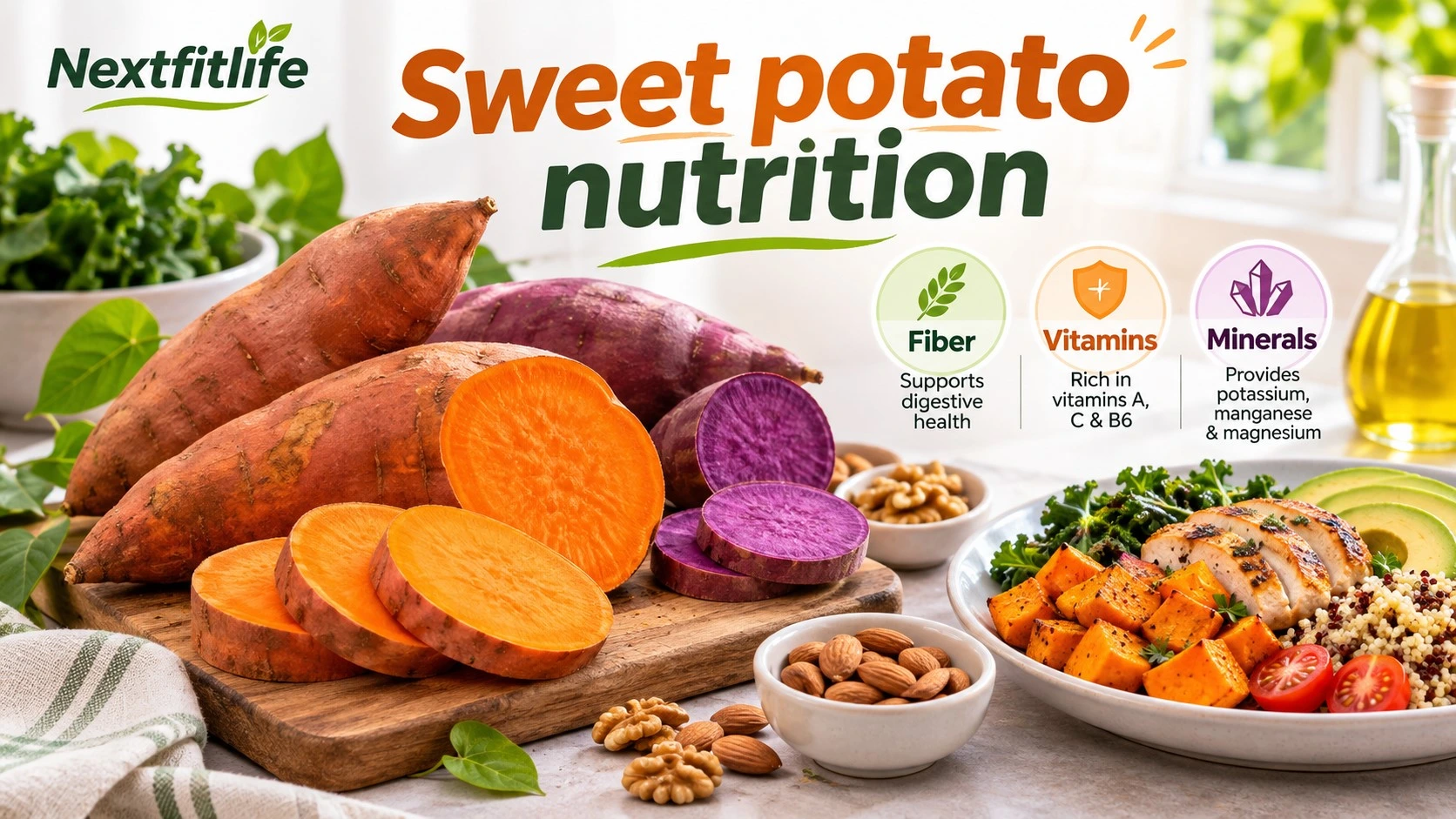
Sweet potato nutrition centers on carbohydrates, fibre, potassium, and colourful plant compounds. Orange varieties are especially rich in beta-carotene, while purple sweet potatoes provide more anthocyanins.
Quick answer: A medium sweet potato provides roughly 100 calories before toppings. It also gives you carbohydrates, fibre, potassium, and provitamin A carotenoid. Exact numbers vary by size, variety, skin, and cooking method, so portion and preparation matter.
Health note: This article is for general information and education. It does not replace medical advice, diagnosis, or treatment.
For more food-based nutrition guidance, visit the NextFitLife Nutrition and Vitamins Hub.
Table of Contents
- Sweet potato nutrition at a glance
- 12 smart nutrition facts
- Orange versus purple sweet potatoes
- Raw versus cooked nutrition
- Sweet potato versus white potato
- Blood sugar and diabetes
- Weight loss and exercise
- Best cooking methods
- Kidney and oxalate safety
- Easy serving ideas
- References and Sources
- Related guides
- About the author
- Frequently asked questions
Sweet Potato Nutrition at a Glance
A sweet potato is a starchy vegetable.
That means most of its calories come from carbohydrates. It also supplies fibre, potassium, vitamin B6, vitamin C, and carotenoids.
| Nutrient | About 100 g Raw | Why It Matters |
|---|---|---|
| Calories | About 86 kcal | Provides energy |
| Carbohydrate | About 20 g | Main energy source |
| Fiber | About 3 g | Supports digestion and fullness |
| Protein | About 1.6 g | Small amount |
| Potassium | About 337 mg | Supports normal muscle and nerve function |
These are approximate USDA values. Cooked food can look different per 100 grams because water content changes during cooking.
12 Smart Sweet Potato Nutrition Facts
1. Sweet Potatoes Are Mainly Carbohydrate
A sweet potato is not a low-carbohydrate vegetable.
Its main nutrient is carbohydrate, which makes it useful for energy. That can fit well in an active diet, especially when you pair it with protein and vegetables.
A medium raw sweet potato listed by the FDA has about 23 grams of carbohydrate.
2. They provide useful dietary fibre
Sweet potatoes supply dietary fibre, especially when you eat the skin.
Fibre helps support normal bowel habits and can help a meal feel more filling. It also works best as part of a diet that includes other plant foods.
For more fibre choices, read the NextFitLife High Fibre Foods Chart.
3. Orange Sweet Potatoes Are Rich in Beta Carotene
This is where orange sweet potatoes stand out.
Beta carotene is a plant pigment that the body can convert to vitamin A. Orange sweet potatoes can provide a large amount from a normal serving.
Vitamin A supports normal vision, immune function, and healthy tissues.
If you want to compare other food sources, see the NextFitLife Vitamin A Rich Foods Guide.
4. Purple Sweet Potatoes Offer Different Plant Pigments
Purple sweet potatoes contain more anthocyanin pigments than orange types.
These compounds help give the flesh its purple color and have antioxidant activity.
That does not make purple sweet potatoes medicine. It simply gives you another colorful whole food to rotate into your meals.
5. Potassium Is One of Their Main Minerals
Sweet potatoes provide a useful amount of potassium.
Potassium supports normal nerve signals, muscle function, and fluid balance.
For most healthy adults, that is a benefit. People with some kidney conditions may need different advice, which we cover later.
6. They Are Low in Fat Before Toppings
A plain sweet potato contains very little fat.
The calories can climb quickly when you add lots of butter, oil, cheese, syrup, marshmallows, or creamy toppings.
This is why cooking method matters more than people think.
7. Sweet Potato Skin Adds Fibre
You can eat the skin if it is washed well and you enjoy the texture.
Sweet potato skin adds extra fibre and reduces food waste.
Peeling is fine too. The flesh still provides carbohydrate, beta-carotene, potassium, and other nutrients.
8. Cooking Changes the Nutrition Numbers
Raw and cooked sweet potato values are not identical.
Boiling adds water to the final food. Baking and roasting can remove water. That means the calories and nutrients per 100 grams may look different even though it is still the same basic food.
Always check whether a nutrition table refers to raw, boiled, baked, peeled, or skin-on sweet potato.
9. Cooking Method Can Change Blood Sugar Response
Sweet potatoes still contain carbohydrates, so they can raise blood sugar.
Preparation changes how quickly some of that starch is digested. Boiled sweet potatoes tend to produce a lower glycemic response than some baked or roasted preparations.
That does not mean baking is unhealthy.
It simply means the glycemic index is not fixed for every sweet potato meal.
10. A Medium Sweet Potato Is a Useful Starting Portion
The FDA reference serving for a medium raw sweet potato is about 130 grams.
That is a sensible starting portion for many meals, but it is not a medical rule.
An athlete after a hard workout may want more. Someone eating sweet potato with rice and bread may want less.
11. Sweet Potatoes Work Better With Protein
A sweet potato alone is mainly carbohydrate.
Pair it with eggs, fish, chicken, yogurt, beans, lentils, tofu, or another protein source to build a more complete meal.
If you want simple examples, see the High Protein High Fibre Diet Plan.
12. Colour Variety Gives You Different Nutrients
Do not feel that one colour is always best.
Orange varieties offer plenty of provitamin A carotenoids. Purple types add anthocyanins, while white and cream varieties still provide carbohydrates, potassium, and fibre.
Eating different plant foods is usually more useful than chasing one perfect sweet potato.
Orange vs Purple vs White Sweet Potatoes
| Type | Main Nutrition Feature | Best Use |
|---|---|---|
| Orange | High in beta-carotene | Baking, roasting, mash |
| Purple | Rich in anthocyanins | Roasting, steaming, bowls |
| White or cream | Less beta carotene than orange types | Savoury meals and roasting |
Colour does not tell you everything, but it gives a useful clue about some plant pigments.
Raw vs Baked Sweet Potato Nutrition
This comparison explains why nutrition numbers online can look inconsistent.
| Preparation | What Changes | Practical Point |
|---|---|---|
| Raw | Higher water content than some baked versions | Useful database baseline |
| Boiled | Takes up water | Often softer and may give a lower glycemic response |
| Baked | Loses some water | Nutrition looks more concentrated per 100 g |
| Fried | Adds cooking fat | Calories rise quickly |
Small differences between USDA, FDA, and other nutrition tables are normal because serving size, variety, skin, and cooking method differ.
Sweet Potato vs White Potato
Both can fit a healthy diet.
Orange sweet potatoes provide much more provitamin A. White potatoes can provide plenty of potassium and vitamin C.
Neither food needs to “win.”
The better choice depends on your meal, your preference, and your health needs.
Are Sweet Potatoes Good for Blood Sugar?
They can fit a balanced diabetes meal plan, but they are still a carbohydrate-rich food.
That means portion matters.
If blood sugar is a concern, try pairing sweet potato with:
- Chicken or fish
- Eggs
- Beans or lentils
- Tofu
- Non-starchy vegetables
- A modest amount of healthy fat
A plate of salmon, broccoli, and half to one medium sweet potato is very different from a large sweet potato covered in syrup and sugar.
Use your glucose readings and medical plan if you have diabetes.
Are Sweet Potatoes Good for Weight Loss?
They can fit very well.
Sweet potatoes provide water, fibre, and carbohydrates, which can make a meal satisfying.
But they do not burn fat.
A plain baked sweet potato is also very different from deep-fried sweet potato fries or a sweet potato casserole loaded with butter and sugar.
For a broader healthy eating pattern, see Top Healthy Foods for Everyday Nutrition.
Are Sweet Potatoes Good Before or After Exercise?
Yes, when carbohydrate fits your training.
Sweet potatoes are a useful source of healthy carbohydrates for active people.
Before exercise, a moderate serving can provide energy. After exercise, pair sweet potato with a protein source to help build a complete recovery meal.
For more ideas, visit Healthy Fitness Foods for Energy and Training.
What Is the Best Way to Cook Sweet Potatoes?
Boiled
Soft, simple, and useful if you want little or no added fat.
Steamed
Another simple method that keeps preparation light.
Baked
Easy and convenient. Watch the toppings if calories or blood sugar matter to you.
Roasted
Great flavor and texture. Measure oil instead of pouring it freely if you are watching calories.
Air Fried
Useful for crisp edges with less oil than deep frying.
Deep Fried
Fine as an occasional food, but the added oil changes the nutrition profile a lot.
Does Cooling Sweet Potatoes Change the Starch?
Some cooked starch changes structure as it cools.
A portion can form more resistant starch through a process called retrogradation.
That does not make cold sweet potato low-carb or calorie-free.
It is still a carbohydrate food, so I would not build a diet around trying to hack the starch.
Can Sweet Potatoes Cause Kidney Stones?
Sweet potatoes contain oxalate.
That matters more for some people who form calcium oxalate kidney stones.
But stone prevention is more complex than avoiding one food. Fluid intake, sodium, dietary calcium, stone type, and urine chemistry also matter.
Do not start a strict low oxalate diet unless your care team has told you it fits your situation.
What About Chronic Kidney Disease?
Sweet potatoes are a higher potassium food.
Some people with kidney disease need to limit potassium, while others do not.
The right amount depends on kidney function, medicines, blood potassium, and whether someone receives dialysis.
If your clinician or renal dietitian has given you a potassium limit, ask how sweet potatoes fit that plan.
Can You Get Too Much Vitamin A From Sweet Potatoes?
Normal food portions are not the same as taking a high-dose vitamin A supplement.
Orange sweet potatoes mainly provide beta-carotene, which is provitamin A.
The body controls how much beta-carotene it converts to active vitamin A.
Eating a lot of beta-carotene-rich foods can make the skin look yellow-orange in some people. This is called carotenemia and is different from vitamin A toxicity.
Easy Sweet Potato Serving Ideas
| Meal | Sweet Potato Idea | Protein Pairing |
|---|---|---|
| Breakfast | Sweet potato hash with spinach | Eggs |
| Lunch | Baked sweet potato with cabbage and salsa | Black beans or Greek yogurt |
| Dinner | Roasted sweet potato and broccoli | Salmon or chicken |
| Plant-based meal | Sweet potato grain bowl | Lentils, chickpeas, or tofu |
| Snack | Small roasted wedges | Hummus or plain yogurt |
Who Should Be More Careful?
Get individual advice if you:
- Have chronic kidney disease and need potassium control
- Have repeated calcium oxalate kidney stones
- Have diabetes and are unsure about carbohydrate portions
- Use a medically prescribed low-carbohydrate diet
- Have digestive problems that make higher fibre foods hard to tolerate
For most people, sweet potatoes fit easily into a varied diet.
Conclusion
Sweet potato nutrition is strong because one simple food gives you carbohydrate, fibre, potassium, and useful plant pigments.
Orange sweet potatoes are especially rich in beta-carotene, while purple types offer anthocyanins. The real difference comes from portion size, toppings, cooking method, and what else is on the plate.
Your next step: try one medium sweet potato with a protein food and vegetables this week. Keep the preparation simple, then adjust the serving to your hunger, training needs, and health goals.
References and Sources
- USDA FoodData Central. Food composition database for sweet potatoes and other foods.
https://fdc.nal.usda.gov/ - U.S. Food and Drug Administration. Nutrition Information for Raw Vegetables.
https://www.fda.gov/food/nutrition-food-labeling-and-critical-foods/nutrition-information-raw-vegetables - NIH Office of Dietary Supplements. Vitamin A and Carotenoids Fact Sheet for Health Professionals.
https://ods.od.nih.gov/factsheets/VitaminA-HealthProfessional/ - Harvard T.H. Chan School of Public Health. Sweet Potatoes.
https://nutritionsource.hsph.harvard.edu/food-features/sweet-potatoes/ - National Kidney Foundation. Kidney friendly nutrition and potassium guidance.
https://www.kidney.org/kidney-topics/japanese-kidney-friendly-diet-food-and-nutrition-guide
Related NextFitLife Guides
- Nutrition and Vitamins Hub
- Vitamin A Rich Foods
- High Fiber Foods Chart
- High Protein High Fiber Diet Plan
- Healthy Fitness Foods
- Healthy Foods for Everyday Nutrition
- Foods for Eye Health
- Biotin Rich Foods
Frequently Asked Questions
How many calories are in a sweet potato?
A medium sweet potato contains roughly 100 calories before toppings. The exact amount changes with size, variety, and cooking method.
Are sweet potatoes high in carbs?
Yes. Sweet potatoes are starchy vegetables, and most of their calories come from carbohydrates. A medium raw sweet potato contains about 23 grams of carbohydrate.
Are sweet potatoes high in fibre?
They provide a useful amount of fibre. A 100-gram raw serving contains about 3 grams, and larger skin-on servings provide more.
Are sweet potatoes high in vitamin A?
Orange sweet potatoes are very rich in beta-carotene, which the body can convert into vitamin A.
Are purple sweet potatoes healthier than orange ones?
Neither is automatically healthier. Orange sweet potatoes are richer in beta-carotene, while purple varieties provide more anthocyanin pigments.
Can people with diabetes eat sweet potatoes?
Yes, but portion and preparation matter because sweet potatoes contain carbohydrates. Pair them with protein and non-starchy vegetables, and follow your individual diabetes plan.
Should I eat sweet potato skin?
You can. The skin adds fibre and is safe to eat when washed well. Peeling is also fine if you prefer the texture without it.
Are sweet potatoes good for weight loss?
They can fit a weight loss diet because they are filling and nutrient-rich, but they do not burn fat. Portion size and toppings still matter.
Can sweet potatoes be a problem with kidney disease?
They are relatively high in potassium. Some people with kidney disease need potassium limits, while others do not, so use your blood results and your clinician's or renal dietitian's advice.
What is the healthiest way to cook sweet potatoes?
Boiling, steaming, baking, roasting, and air frying can all fit a healthy diet. The amount of added oil, sugar, butter, and other toppings usually matters more than picking one perfect method.