
NextFitLife Fitness Hub
Published: July 2026 · Last updated: July 2026 · Next review: July 2027
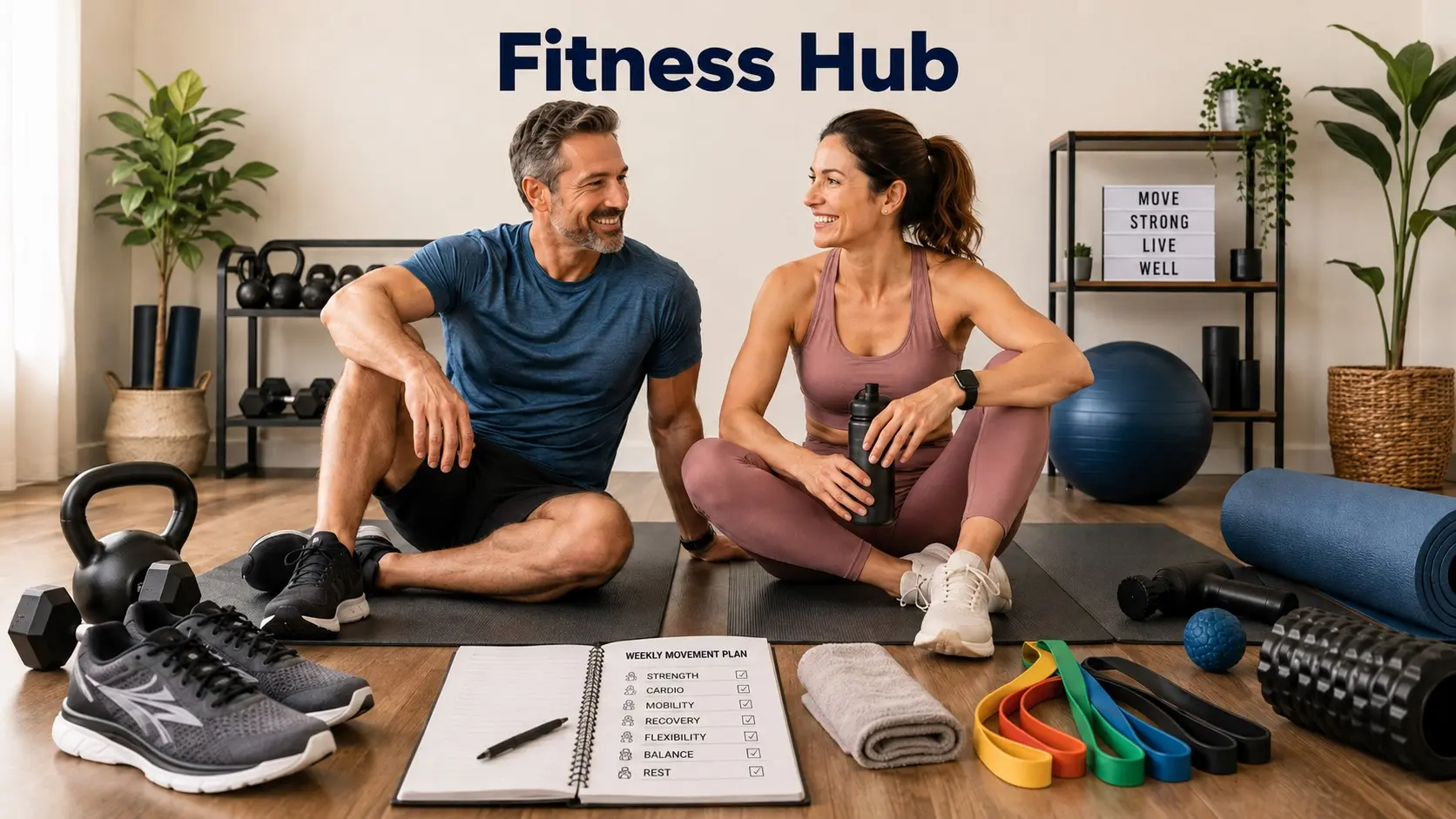
Fitness advice should be useful, realistic, and safe. Our goal is to help readers build sustainable movement habits, understand common training options, avoid exaggerated claims, and know when exercise questions should be discussed with a qualified healthcare or fitness professional.
Start with the topic that matches your current goal, then use the related sub-hubs to build a balanced routine that includes movement, recovery, progression, and safety.
Important fitness safety note
This Fitness Hub is for education only. It does not diagnose injuries, replace medical care, prescribe a personal workout plan, or tell you to start, stop, or change treatment, medication, supplements, diet, or exercise.
Seek urgent medical help if you have chest pain, severe shortness of breath, fainting, sudden weakness, signs of stroke, severe dizziness, severe allergic reaction, severe injury, uncontrolled bleeding, confusion, seizure, or symptoms that feel sudden, severe, unusual, or dangerous during or after exercise.
Speak with a qualified healthcare professional before starting or intensifying exercise if you have heart disease, chest symptoms, high blood pressure, diabetes, pregnancy, dizziness, fainting, severe obesity, chronic pain, joint problems, recent surgery, a history of injury, neurological symptoms, or any medical condition that may affect safe movement.
How the Fitness Hub is built for safer exercise information
NextFitLife fitness content is written for educational purposes, not for diagnosis, treatment, or individualized coaching. When we cover exercise, strength training, cardio, recovery, flexibility, sports performance, nutrition, supplements, injury prevention, or weight-related topics, we aim to use trusted medical, public-health, sports-medicine, and exercise-science sources where appropriate.
We do not treat all fitness topics as equal risk. Higher-risk topics such as chest pain during exercise, high-intensity training, advanced workouts, injury recovery, pregnancy exercise, diabetes and exercise, supplements, extreme weight loss, and training with chronic disease require stronger sourcing, clearer safety notes, and extra caution.
Each major fitness guide should clearly show:
- Who wrote the content
- When was it published or last updated
- Whether it was editorially reviewed or medically reviewed
- Which trusted sources support the key claims
- When should readers modify or stop exercising
- When should readers speak with a qualified healthcare, fitness, or sports-medicine professional
Key source types used across this Fitness Hub
The sources used vary by article, but our fitness content commonly relies on trusted exercise, medical, and public-health references such as:
- CDC: Adult Physical Activity Guidelines
- CDC: Adding Physical Activity as an Adult
- World Health Organization: Physical Activity
- Physical Activity Guidelines for Americans, 2nd Edition
- MedlinePlus: Exercise and Physical Fitness
- MedlinePlus: Benefits of Exercise
- MedlinePlus: How to Avoid Exercise Injuries
- American Heart Association: Physical Activity Recommendations for Adults
- NHS: Physical Activity Guidelines for Adults
- NHS: Physical Activity Guidelines for Older Adults
- American College of Sports Medicine: Physical Activity Guidelines
Individual articles should include their own references when they discuss specific workouts, injuries, heart symptoms, pregnancy, diabetes, chronic disease, pain, supplements, nutrition, recovery, or performance claims.
How is this Fitness Hub created and maintained
This Fitness Hub is written and maintained by Adel Galal, founder and health & wellness writer at NextFitLife.
- We choose fitness topics that are useful for adults who want practical, safer movement guidance.
- We organize articles into topic-based sub-hubs so readers can find related workouts, safety notes, and training concepts more easily.
- We check trusted medical, public-health, exercise-science, and sports-medicine sources before writing or updating major guides.
- We avoid presenting extreme routines, supplements, fast transformation claims, or single exercises as guaranteed solutions.
- We add safety notes when a topic may involve injury, pain, pregnancy, chronic disease, medication, heart symptoms, dizziness, or urgent warning signs.
- We review and update important guides when exercise guidance changes or when better sources become available.
Some higher-risk articles may receive review by a qualified healthcare, sports medicine, physical therapy, or fitness professional. When a page has been medically reviewed or professionally reviewed, the reviewer’s name, credentials, and review date should be shown clearly. If no reviewer is listed, readers should treat the article as editorially reviewed fitness information, not personal medical or training advice.
Who is this Fitness Hub for
This hub is for adults who want to move more, get stronger, improve endurance, build better habits, support healthy aging, and understand fitness without hype.
It is especially useful for beginners, adults returning to exercise, people over 40 who want to preserve strength and mobility, and readers who want to balance training with recovery, nutrition, and injury prevention.
Start here with a fitness goal
Choose the topic that best matches your current goal. Each sub-hub organizes related articles into a clearer path so you can build a more balanced routine.
Build strength and muscle
Start here if you want to understand resistance training, bodyweight exercise, dumbbells, kettlebells, progressive overload, and safer muscle-building basics.
Improve cardio and endurance
Start here if you are focused on walking, running, heart-health workouts, endurance, aerobic fitness, or conditioning.
Move better and stay flexible
Start here if you want yoga, stretching, mobility, flexibility, posture support, and lower-impact movement options.
Recover and reduce injury risk
Start here if you want to understand rest, recovery, soreness, warmups, injury-prevention exercises, and when pain needs care.
Start exercising as a beginner
Start here if you are new to fitness, returning after a break, or trying to build a simple routine that feels realistic.
Train at home
Start here if you want bodyweight workouts, home equipment ideas, dumbbell routines, kettlebell options, or no-gym training.
Explore all 9 Fitness sub-hubs
Use the topic cards below to explore all Fitness sub-hubs on NextFitLife. Each card explains what the sub-hub covers and when the topic may need extra caution because it can affect training safety or medical decisions.
Strength Training & Muscle Building
Guides on resistance training, dumbbells, kettlebells, bodyweight exercises, muscle-building basics, leg exercises, arms, shoulders, core, and progressive training.
Use extra caution for: heavy lifting, poor form, joint pain, back pain, high blood pressure, recent injury, older adults, and training to failure.
Cardio & Endurance
Guides on walking, running, LISS cardio, heart-health workouts, endurance training, 10K tips, aerobic conditioning, and safe progression.
Use extra caution for: chest pain, shortness of breath, dizziness, fainting, heart disease, high blood pressure, and sudden intense exercise.
Yoga & Flexibility
Guides on yoga, stretching, flexibility, mobility, balance, breathing, beginner yoga, yoga for runners, and gentle movement routines.
Use extra caution for: pregnancy, dizziness, joint instability, severe back pain, nerve symptoms, glaucoma concerns, and advanced poses.
Recovery & Injury Prevention
Guides on warmups, cooldowns, rest days, soreness, injury-prevention exercises, recovery habits, training balance, and pain warning signs.
Use extra caution for: sharp pain, swelling, weakness, numbness, severe soreness, suspected fracture, repeated injuries, and pain that worsens.
Fitness for Beginners
Guides for starting exercise, building consistency, basic workouts, beginner running, beginner strength training, and realistic movement habits.
Use extra caution for: going too hard too fast, existing symptoms, chronic disease, joint pain, severe obesity, pregnancy, and long inactivity.
Advanced Training & Performance
Guides on HIIT, performance training, skill-related fitness, athletic conditioning, CrossFit-style workouts, progression, and higher-intensity routines.
Use extra caution for: high-intensity exercise, overtraining, poor recovery, heart symptoms, dizziness, injury history, and training beyond current capacity.
Home Workouts & Equipment
Guides on home workouts, no-equipment routines, dumbbells, kettlebells, resistance bands, core workouts, small-space training, and simple equipment choices.
Use extra caution for: unsafe setup, slippery floors, poor form, unstable equipment, overhead lifting, and workouts without supervision.
Fitness Nutrition & Supplements
Guides on workout nutrition, protein, hydration, pre-workout topics, supplements, weight-related goals, and eating patterns that support training.
Use extra caution for: supplement claims, stimulant products, kidney disease, diabetes, pregnancy, medication interactions, eating disorders, and extreme diets.
Mind-Body Fitness
Guides on movement and mental wellness, meditation, yoga and meditation, stress support, walking for mood, breathing practices, and consistency habits.
Use extra caution for: depression, anxiety, trauma, suicidal thoughts, severe stress, dizziness with breathing practices, and replacing mental health care with exercise alone.
Recommended starting Fitness guides
These guides may help you begin with common fitness goals. They should be read as educational resources, not personal workout prescriptions.
- Healthy and Active Lifestyle: Movement, Daily Habits, and Safety Basics
- Physical Fitness: Components, Benefits, and How to Start Safely
- Skill-Related Fitness: Balance, Coordination, Agility, and Performance Basics
- How to Get Fit at Home: Beginner-Friendly Workout Basics
- Fitness Routine: Building Strength, Cardio, and Recovery Over Time
- Benefits of Exercise for Heart Health: What Movement Can Support
- Walking and Running: Pros, Cons, and How to Choose
- Injury Prevention Exercises: Safer Movement and Training Questions
How to use this Fitness Hub
Use this hub as a map. Start with the sub-hub closest to your current goal, then follow the related articles inside that topic.
For example, if your goal is to get stronger, start with Strength Training & Muscle Building. If your goal is better endurance, start with Cardio & Endurance. If you are new to exercise, start with Fitness for Beginners and Recovery & Injury Prevention before trying advanced routines.
A balanced fitness plan usually includes movement you enjoy, strength work, aerobic activity, mobility, recovery, nutrition, sleep, and progression that matches your current ability. It should also leave room for medical advice when symptoms, injuries, pregnancy, or chronic conditions are involved.
What this hub can and cannot do
This hub can help you:
- Understand fitness topics in plain language
- Compare strength, cardio, flexibility, recovery, and home workout options
- Find related articles by training goal
- Learn common exercise safety warning signs
- Build better questions for a healthcare or fitness professional
- Avoid exaggerated fitness, supplement, and fast-transformation claims
This hub cannot:
- Diagnose pain, injury, or medical symptoms
- Replace medical care, physical therapy, or personal coaching
- Create a workout plan specific to your body and history
- Tell you to start, stop, or change medication or treatment
- Guarantee weight loss, muscle gain, performance, or injury prevention
- Know whether every exercise is safe for your situation
Frequently asked questions
What is the NextFitLife Fitness Hub?
The Fitness Hub is a collection of topic-based fitness sub-hubs covering strength training, cardio, yoga, flexibility, recovery, beginner fitness, advanced performance, home workouts, fitness nutrition, supplements, and mind-body fitness.
Where should I start if I am new to fitness?
Start with Fitness for Beginners, Recovery & Injury Prevention, and Home Workouts & Equipment. These sections can help you understand simple movement options, safer progression, and basic training structure before trying advanced routines.
How much exercise do adults usually need?
General public-health guidance commonly recommends regular aerobic physical activity plus muscle-strengthening activity. Individual needs can vary based on age, fitness level, medical history, pregnancy status, symptoms, medications, and training goals.
When should I talk to a doctor before exercising?
Speak with a qualified healthcare professional before starting or intensifying exercise if you have chest symptoms, heart disease, uncontrolled high blood pressure, diabetes, fainting, dizziness, pregnancy, severe pain, recent surgery, chronic disease, or a history of injury.
Can fitness articles replace a trainer or physical therapist?
No. Fitness articles can help you learn concepts, but they cannot assess your movement, injury history, strength, mobility, pain, technique, or medical risk. A qualified trainer, physical therapist, or healthcare professional can provide individualized guidance.
Are supplements required for fitness results?
No. Supplements are not required for most people to become more active, build strength, or improve fitness. Be cautious with supplement claims, stimulant products, fat-loss products, and pre-workout formulas, especially if you take medication or have a medical condition.
Are the articles in this Fitness Hub medically reviewed?
Some higher-risk articles may receive medical, fitness, physical therapy, or professional review. When a page has been reviewed, the reviewer’s name, credentials, and review date should be shown clearly. If no reviewer is listed, readers should treat the article as editorially reviewed fitness information, not personal medical or training advice.
How often should fitness content be updated?
Important fitness content should be reviewed at least once a year, or sooner when exercise guidance changes, safety information changes, supplement guidance changes, or better sources become available.
Our editorial and review standards
To understand how NextFitLife handles health and fitness content, corrections, medical review, and reader safety, read:
Key references and source standards
This hub connects to articles across many fitness topics. The references below support the overall source standard for the Fitness Hub. Individual articles and sub-hubs should include their own topic-specific references.
- Centers for Disease Control and Prevention. Adult Activity: An Overview.
- Centers for Disease Control and Prevention. Adding Physical Activity as an Adult.
- World Health Organization. Physical Activity.
- U.S. Department of Health and Human Services. Physical Activity Guidelines for Americans, 2nd Edition.
- MedlinePlus. Exercise and Physical Fitness.
- MedlinePlus. Benefits of Exercise.
- MedlinePlus Medical Encyclopedia. How to Avoid Exercise Injuries.
- American Heart Association. Recommendations for Physical Activity in Adults.
- NHS. Physical Activity Guidelines for Adults Aged 19 to 64.
- NHS. Physical Activity Guidelines for Older Adults.
- American College of Sports Medicine. Physical Activity Guidelines.
Conclusion
Fitness works best when it is realistic, consistent, progressive, and safe. You do not need a perfect routine to begin. You need a starting point that matches your body, goals, schedule, and current ability.
The NextFitLife Fitness Hub gives you an organized place to explore strength training, cardio, yoga, flexibility, recovery, beginner workouts, advanced training, home exercise, nutrition, supplements, and mind-body fitness.
Start with the sub-hub that matches your goal today. Then use the related guides to build a more balanced approach to movement, recovery, and long-term health.
Medical and fitness disclaimer
All fitness content on NextFitLife is for educational purposes only and is not intended to replace professional medical advice, diagnosis, personal training, physical therapy, nutrition care, emergency care, or treatment. Always consult a qualified healthcare provider before starting or changing exercise, supplements, diet, medication, rehabilitation, or treatment, especially if you have symptoms, a medical condition, take prescription medication, are pregnant, are immunocompromised, or are managing a chronic disease.
If you experience urgent symptoms during or after exercise, such as chest pain, severe shortness of breath, fainting, sudden weakness, signs of stroke, severe dizziness, severe allergic reaction, uncontrolled bleeding, confusion, seizure, or severe injury, seek emergency medical help immediately.