Published: Jun 30, 2025
Last updated: July 19, 2026
Next review: July 2027
Written by: Adel Galal, Founder and Lead Writer at NextFitLife
Editorial review: Updated using current calcium, vitamin D, osteoporosis, exercise, and bone nutrition guidance
Medical review status: This article has not been medically reviewed by a doctor or registered dietitian
Reading time: About 20 minutes
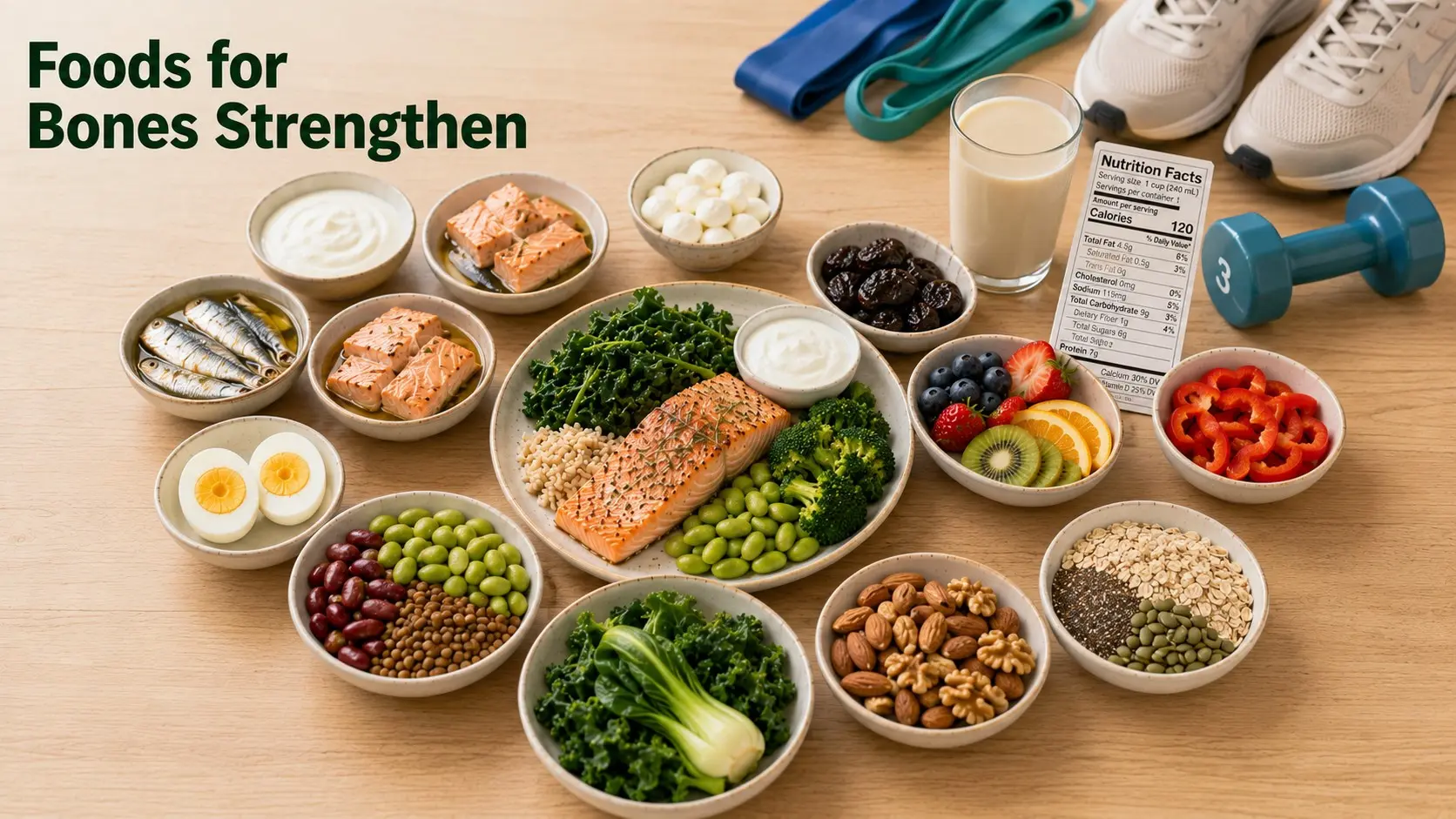
Foods for Bones Strengthen can help you obtain calcium, vitamin D, protein, magnesium, vitamin K, and other nutrients that support normal bone health.
One meal cannot rebuild weak bones.
One food cannot prevent every fracture.
Your skeleton is living tissue. Old bone is removed, and new bone is formed throughout life.
Food supports this process, but it is only one part of a full bone health plan.
Strong bones also depend on movement, muscle strength, balance, hormones, genetics, age, medical conditions, medicine use, smoking, alcohol, and fall prevention.
People with osteoporosis may also need prescription treatment.
This guide explains 11 useful food groups, their main nutrients, realistic calcium amounts, vitamin D needs, simple meals, exercise, supplement safety, and warning signs that need medical care.
For more complete bone nutrition guidance, visit the NextFitLife Bone and Joint Health Hub.
Important Medical Note
This content is for general educational purposes and does not replace professional medical advice, diagnosis, or treatment. Consult an appropriately qualified healthcare professional for personal medical concerns. What I share comes from actual life experience, extensive research, and consultation with healthcare providers. Always consult qualified medical professionals for diagnosis and treatment of any health condition.
I am also not an endocrinologist, kidney specialist, registered dietitian, pharmacist, orthopedic specialist, physical therapist, or osteoporosis specialist.
Do not start high dose calcium, vitamin D, vitamin K, magnesium, strontium, or bone supplements because of this article.
Speak with a healthcare professional before changing your diet or supplements when you have osteoporosis, kidney disease, kidney stones, high blood calcium, parathyroid disease, digestive disease, a past fracture, or take prescription medicine.
Quick Answer: What Are the Best Foods for Bones Strengthen?
The best Foods for Bones Strengthen include:
- Plain yogurt
- Milk and fortified soy drinks
- Cheese
- Sardines and canned salmon with soft bones
- Tofu made with calcium sulfate
- Salmon, trout, and other fatty fish
- Eggs
- Beans, lentils, soybeans, and edamame
- Kale, bok choy, turnip greens, and broccoli
- Nuts, seeds, oats, and whole grains
- Prunes, berries, citrus fruit, and colorful vegetables
These food groups provide different parts of bone health nutrition.
Dairy, fortified foods, fish with bones, and calcium set tofu provide useful calcium.
Fatty fish and fortified foods may provide vitamin D.
Fish, eggs, yogurt, beans, tofu, and poultry provide protein.
Nuts, seeds, beans, and whole grains provide magnesium.
Leafy vegetables provide vitamin K and other plant nutrients.
What Makes Bones Strong?
Bone strength is not determined by calcium alone.
Healthy bones need:
- Calcium rich foods
- Vitamin D foods
- Enough protein
- Magnesium
- Vitamin K
- Phosphorus in balance
- Enough energy from food
- Regular physical activity
- Strong muscles
- Good balance
- Healthy hormone function
- Medical care when disease is present
Bone mineral density is only one part of bone strength.
Bone structure, quality, size, age, and fall risk also matter.
Can Foods for Bones Strengthen Reverse Osteoporosis?
No food can promise to reverse osteoporosis.
A balanced diet can help you meet nutrient needs and support treatment.
However, osteoporosis is a medical condition.
It develops when bone mineral density, bone mass, or bone structure changes enough to raise fracture risk.
A healthcare professional may recommend:
- A bone density test
- Fracture risk assessment
- Calcium and vitamin D review
- Exercise guidance
- Fall prevention
- Prescription medicine
Do not replace osteoporosis medicine with milk, supplements, herbs, or a special diet.
How Much Calcium Do You Need?
| Age or Life Stage | Calcium Needed Each Day |
|---|---|
| Birth to 6 months | 200 milligrams |
| 7 to 12 months | 260 milligrams |
| 1 to 3 years | 700 milligrams |
| 4 to 8 years | 1,000 milligrams |
| 9 to 18 years | 1,300 milligrams |
| Adults aged 19 to 50 | 1,000 milligrams |
| Men aged 51 to 70 | 1,000 milligrams |
| Women aged 51 to 70 | 1,200 milligrams |
| Adults older than 70 | 1,200 milligrams |
| Pregnant or breastfeeding teens | 1,300 milligrams |
| Pregnant or breastfeeding adults | 1,000 milligrams |
These are general targets for healthy people.
Your personal goal may differ because of age, diet, pregnancy, kidney health, digestive absorption, blood tests, or osteoporosis treatment.
How Much Vitamin D Do You Need?
Vitamin D helps the intestine absorb calcium.
General daily targets are:
- 400 IU for babies younger than 1 year
- 600 IU for children and adults aged 1 to 70
- 800 IU for adults older than 70
Few foods naturally contain much vitamin D.
Fatty fish and fortified foods are among the main food sources.
Some people may need a supplement because food alone may not provide enough.
Use blood testing and professional advice when deficiency is suspected.
Read the NextFitLife Foods High in Vitamin D Guide.
Top 11 Foods for Bones Strengthen
1. Plain Yogurt
Plain yogurt is one of the richest everyday calcium foods.
Eight ounces of plain low fat yogurt may provide about 415 milligrams of calcium.
The amount varies by brand and serving size.
Yogurt also provides:
- Protein
- Vitamin B12
- Phosphorus
- Iodine
- Vitamin D when fortified
Serve plain yogurt with:
- Berries
- Oats
- Chia seeds
- Fruit
- Unsalted nuts
Choose plain yogurt more often than products with a large amount of added sugar.
Lactose free yogurt may suit people with lactose intolerance.
Yogurt is not suitable for someone with a milk protein allergy.
2. Milk and Fortified Soy Drinks
One cup of milk may provide about 276 to 299 milligrams of calcium.
Milk also provides protein, vitamin B12, phosphorus, and iodine.
Many milk products are fortified with vitamin D.
Fortified soy drink may provide a similar amount of calcium and often contains more protein than almond, rice, coconut, or many oat drinks.
Check the label for:
- Calcium
- Vitamin D
- Vitamin B12
- Protein
- Added sugar
Shake fortified plant drinks before pouring.
Added calcium can settle at the bottom.
Use milk or fortified soy drink in:
- Oatmeal
- Cereal
- Soup
- Smoothies
- Simple sauces
Lactose free milk usually contains similar calcium to regular milk.
3. Cheese
Cheese provides calcium, protein, phosphorus, and vitamin B12.
Part skim mozzarella may provide about 333 milligrams of calcium in a 1.5 ounce serving.
Other cheeses provide different amounts.
Use cheese in a moderate portion because some products contain a lot of sodium and saturated fat.
Add cheese to:
- Eggs
- Vegetable meals
- Whole grain toast
- Bean dishes
- Salads
Many aged cheeses contain little lactose.
They are still unsafe for someone with a milk protein allergy.
4. Sardines and Canned Salmon With Soft Bones
Fish with edible bones is one of the strongest nondairy calcium choices.
Three ounces of canned sardines with bones may provide about 325 milligrams of calcium.
Three ounces of canned pink salmon with bones may provide about 181 milligrams.
The soft bones provide most of the calcium.
These foods also provide:
- Protein
- Vitamin B12
- Omega 3 fats
- Selenium
- Vitamin D in some products
Use sardines or salmon in:
- Whole grain sandwiches
- Rice bowls
- Salads
- Fish cakes
- Pasta dishes
Mash the soft bones into the fish.
Fresh salmon does not provide the same calcium amount because its bones are not eaten.
5. Tofu Made With Calcium Sulfate
Firm tofu made with calcium sulfate may provide about 253 milligrams of calcium in one half cup.
Tofu made with another setting agent may contain much less calcium.
Check the ingredient list and Nutrition Facts label.
Calcium set tofu also provides plant protein.
Serve it:
- With rice and vegetables
- In soup
- In curry
- Scrambled with vegetables
- In a salad bowl
People with a soy allergy must avoid tofu.
6. Salmon, Trout, and Other Fatty Fish
Fatty fish is important because it provides vitamin D and protein.
Three ounces of cooked trout may provide about 645 IU of vitamin D.
Three ounces of cooked salmon may provide about 570 IU.
Exact amounts vary by species, source, and preparation.
Useful fish include:
- Salmon
- Trout
- Mackerel
- Sardines
- Herring
Serve fish with:
- Kale
- Broccoli
- Potatoes
- Brown rice
- Beans
Fish supports a complete bone meal.
It does not act as osteoporosis medicine.
7. Eggs
Eggs provide protein, choline, vitamin B12, selenium, iodine, and a small amount of vitamin D.
The yolk contains most of the vitamin D.
Eggs are useful because they support protein intake and can be combined with calcium foods.
Serve eggs with:
- Kale
- Broccoli
- Cheese
- Whole grain toast
- Fortified soy drink
Eggs do not provide enough vitamin D to meet the full daily need by themselves.
Avoid eggs when you have an allergy.
8. Beans, Lentils, Soybeans, and Edamame
Beans and lentils provide plant protein, magnesium, iron, zinc, potassium, folate, and fiber.
Cooked soybeans may also provide about 131 milligrams of calcium in one half cup.
Useful choices include:
- Soybeans
- Edamame
- Chickpeas
- Black beans
- White beans
- Lentils
Serve them:
- With rice
- In soup
- In salads
- With vegetables
- In whole grain wraps
Beans contain compounds that can reduce mineral absorption.
This does not mean you should avoid them.
Soaking dried beans and cooking them in fresh water may reduce some of these compounds.
Beans are part of a varied bone healthy diet.
9. Kale, Bok Choy, Turnip Greens, and Broccoli
These vegetables provide calcium, vitamin K, vitamin C, folate, magnesium, and other nutrients.
Approximate calcium amounts include:
- 99 milligrams in one half cup of cooked turnip greens
- 94 milligrams in one cup of cooked kale
- 74 milligrams in one cup of raw bok choy
- 21 milligrams in one half cup of raw broccoli
These foods contain less calcium per serving than milk or yogurt.
However, calcium from kale, broccoli, and cabbage is absorbed efficiently.
Serve greens:
- With eggs
- With fish
- With beans
- In soup
- With tofu
People taking warfarin should keep vitamin K intake steady and follow professional advice.
Why Spinach Is Not the Best Calcium Vegetable
Spinach contains calcium.
One half cup of cooked spinach may contain about 123 milligrams.
However, spinach also contains oxalic acid.
This binds much of the calcium and makes it difficult to absorb.
Only about 5 percent of spinach calcium may be absorbed.
Spinach remains nutritious.
It provides folate, magnesium, iron, and vitamin K.
It should not be your main calcium source.
10. Nuts, Seeds, Oats, and Whole Grains
Nuts, seeds, oats, and whole grains provide magnesium, protein, fiber, zinc, and healthy fats.
Chia seeds also provide calcium.
One tablespoon of chia may provide about 76 milligrams.
Useful choices include:
- Almonds
- Walnuts
- Pumpkin seeds
- Chia seeds
- Ground flaxseed
- Oats
- Quinoa
- Whole grain bread
Add them to:
- Yogurt
- Oatmeal
- Salad
- Vegetable dishes
- Fortified cereal
Use unsalted nuts and seeds.
Increase chia slowly and drink enough fluid.
Magnesium supports bone and muscle function, but magnesium supplements are not a replacement for calcium, vitamin D, exercise, or osteoporosis treatment.
Read the NextFitLife Magnesium Foods Guide.
11. Prunes, Berries, Citrus Fruit, and Colorful Vegetables
Fruit and colorful vegetables provide vitamin C, vitamin K, potassium, fiber, and plant compounds.
Useful choices include:
- Prunes
- Blueberries
- Strawberries
- Oranges
- Kiwi
- Bell peppers
- Tomatoes
- Carrots
Vitamin C helps the body make collagen.
Collagen forms part of the bone framework.
This does not mean oranges or berries directly build bone mineral density.
Research on prunes, berries, olive oil, and omega 3 foods is promising but not conclusive.
Use these foods as part of a varied eating pattern.
Foods for Bones Strengthen at a Glance
| Food | Main Bone Nutrients | Simple Serving Idea |
|---|---|---|
| Plain yogurt | Calcium, protein, B12 | Serve with berries and chia |
| Milk | Calcium, protein, B12, vitamin D when fortified | Use in oatmeal |
| Fortified soy drink | Calcium, protein, vitamin D, B12 | Use with fortified cereal |
| Cheese | Calcium, protein, phosphorus | Add a small portion to eggs |
| Sardines with bones | Calcium, protein, omega 3 fats | Serve on whole grain toast |
| Calcium set tofu | Calcium and plant protein | Cook with bok choy and rice |
| Salmon | Vitamin D, protein, omega 3 fats | Bake with broccoli |
| Eggs | Protein, B12, small vitamin D amount | Serve with kale |
| Beans and lentils | Protein, magnesium, folate, iron | Add to soup or rice |
| Kale and bok choy | Calcium, vitamin K, vitamin C | Cook with tofu |
| Nuts and seeds | Magnesium, protein, healthy fats | Add to yogurt or oats |
Calcium Absorption Matters
The calcium number on a food label does not tell the full story.
Your body absorbs different amounts from different foods.
Calcium absorption from dairy and many fortified foods is about 30 percent.
Absorption may be reduced by:
- Low vitamin D status
- Oxalic acid
- Phytic acid
- Age
- Some digestive conditions
- Some medicines
A varied diet usually matters more than trying to avoid every compound that affects absorption.
Protein and Bone Strength
Bone is not made from minerals alone.
Protein forms part of the bone matrix.
Protein also helps maintain muscles.
Strong muscles improve movement and reduce fall risk.
Useful protein choices include:
- Yogurt
- Milk
- Eggs
- Fish
- Chicken
- Beans
- Lentils
- Tofu
- Tempeh
- Nuts
- Seeds
A very low protein diet may harm bone and muscle health.
People with kidney disease may need a personal protein target.
Vitamin K and Bone Health
Vitamin K supports proteins involved in bone metabolism.
Leafy greens provide vitamin K1.
Some fermented and animal foods provide vitamin K2.
Vitamin K is part of a complete nutrition pattern.
It does not replace calcium or vitamin D.
People taking warfarin or another vitamin K sensitive medicine should not suddenly change vitamin K intake.
Do not begin a vitamin K2 supplement without medical advice.
Read the NextFitLife Vitamin K2 Benefits Guide.
A One Day Foods for Bones Strengthen Meal Plan
This is a general example.
It is not a medical treatment plan.
Breakfast
Plain yogurt with fortified cereal, berries, and chia seeds.
Morning Drink
Milk or fortified soy drink.
Lunch
Calcium set tofu with bok choy, broccoli, and brown rice.
Snack
One orange with a small handful of almonds.
Dinner
Canned salmon with soft bones, potatoes, and cooked kale.
Alternative Dinner
Sardines with whole grain toast, turnip greens, and vegetable salad.
Three Day Bone Healthy Meal Plan
Day 1
Breakfast: Yogurt with oats, berries, and chia.
Lunch: Tofu with bok choy and rice.
Dinner: Salmon, broccoli, and potatoes.
Day 2
Breakfast: Eggs with cheese and cooked kale.
Lunch: Lentil soup with whole grain bread and yogurt.
Dinner: Sardines with rice and turnip greens.
Day 3
Breakfast: Fortified cereal with fortified soy drink and strawberries.
Lunch: Soybean and vegetable bowl with quinoa.
Dinner: Canned salmon with soft bones, bok choy, and potatoes.
Use the NextFitLife Meal Prep and Recipes Hub for more meal planning ideas.
Foods for Bones Strengthen Shopping List
Dairy and Alternatives
- Plain yogurt
- Milk
- Lactose free milk
- Fortified soy drink
- Mozzarella
- Hard cheese
Fish and Protein
- Sardines with bones
- Canned salmon with bones
- Salmon
- Trout
- Eggs
- Chicken
- Tofu made with calcium sulfate
- Tempeh
Beans and Grains
- Soybeans
- Edamame
- Lentils
- Chickpeas
- Oats
- Brown rice
- Quinoa
- Whole grain bread
Vegetables
- Kale
- Bok choy
- Turnip greens
- Broccoli
- Bell peppers
- Carrots
Fruit, Nuts, and Seeds
- Prunes
- Berries
- Oranges
- Kiwi
- Almonds
- Walnuts
- Chia seeds
- Pumpkin seeds
- Ground flaxseed
Bone Foods for Lactose Intolerance
Lactose intolerance does not always require complete dairy avoidance.
Many people can tolerate:
- Lactose free milk
- Lactose free yogurt
- Hard cheese
- Small dairy portions with meals
Nondairy choices include:
- Fortified soy drink
- Calcium set tofu
- Sardines with bones
- Canned salmon with bones
- Kale
- Bok choy
- Fortified cereal
A milk allergy is different from lactose intolerance.
People with a milk allergy must avoid milk proteins.
Foods for Bones Strengthen on a Vegan Diet
A vegan diet can support bone health with careful planning.
Useful choices include:
- Fortified soy drink
- Calcium set tofu
- Soybeans
- Edamame
- Kale
- Bok choy
- Turnip greens
- Broccoli
- Chia seeds
- Fortified cereal
Vitamin B12 must come from fortified foods or a suitable supplement.
Vitamin D, iodine, protein, zinc, calcium, and omega 3 intake also need attention.
A registered dietitian can help when the diet is highly restricted.
Calcium Supplements
Food should usually be the first source of calcium.
A supplement may help when food does not provide enough.
Supplements are not necessary for everyone.
They may cause:
- Constipation
- Gas
- Bloating
- Nausea
They may also interact with medicine.
Use a supplement only to fill a real intake gap.
Calcium Carbonate and Calcium Citrate
Calcium carbonate contains more elemental calcium.
It is usually taken with food.
Calcium citrate depends less on stomach acid.
It can be taken with or without food.
Calcium citrate may feel gentler for some people.
Check the label for elemental calcium.
How to Use Calcium Supplements Safely
When a healthcare professional recommends calcium:
- Count calcium from food first
- Read the elemental calcium amount
- Use the advised dose
- Keep each dose at 500 milligrams or less unless directed otherwise
- Take calcium carbonate with food
- Ask about medicine timing
- Report constipation or nausea
Calcium can interfere with levothyroxine, some antibiotics, and other medicines.
Ask a pharmacist how far apart the doses should be.
Can You Get Too Much Calcium?
Yes.
For most adults aged 19 to 50, the upper limit is 2,500 milligrams each day from food and supplements combined.
For adults aged 51 and older, the upper limit is 2,000 milligrams.
These numbers are safety limits, not intake goals.
Too much calcium may contribute to:
- Constipation
- Nausea
- Kidney problems
- Excess urination
- Abnormal heart rhythm
- High blood calcium
Vitamin D Supplement Safety
More vitamin D is not always better.
Excess vitamin D from supplements can cause high blood calcium.
Possible effects include:
- Nausea
- Vomiting
- Muscle weakness
- Confusion
- Excess thirst
- Frequent urination
- Kidney stones
- Kidney failure in severe cases
Use testing and professional advice instead of guessing at high doses.
Exercise Is Essential for Strong Bones
Food alone is not enough.
Weight-bearing exercise makes your bones work against gravity.
Examples include:
- Brisk walking
- Stair climbing
- Dancing
- Jogging when safe
- Racket sports
Resistance training strengthens muscles and places useful stress on bones.
Examples include:
- Free weights
- Weight machines
- Resistance bands
- Body weight exercise
- Standing from a chair
Balance training may reduce fall risk.
Examples include:
- Tai chi
- Standing on one leg when safe
- Heel-to-toe walking
- Guided balance exercises
Speak with a healthcare professional or physical therapist before beginning a new program when you have osteoporosis, a past spine fracture, balance problems, pain, or a high fracture risk.
Read the NextFitLife Walking Exercise for Seniors Guide.
Habits That May Weaken Bones
Long-term bone health may be harmed by:
- Smoking
- Heavy alcohol use
- Very low-calorie diets
- Poor protein intake
- Long periods of inactivity
- Repeated falls
- Untreated vitamin D deficiency
- Long-term steroid medicine
- Untreated hormone disorders
A complete bone plan must address these risks.
Who May Need a Bone Density Test?
A bone density test measures bone mineral density.
It may be recommended because of age or fracture risk.
Risk factors may include:
- Older age
- Menopause
- A fracture after a minor fall
- Long-term steroid use
- Very low body weight
- A parental hip fracture
- Smoking
- Heavy alcohol use
- Rheumatoid arthritis
- Digestive conditions that reduce absorption
- Low testosterone or estrogen
A normal blood calcium result does not prove that your bones are strong.
The body keeps blood calcium within a narrow range.
When to Contact a Healthcare Professional
Arrange medical advice when you have:
- A fracture after a minor fall
- Repeated fractures
- Loss of height
- A new rounded upper back
- Persistent back pain
- Long-term steroid use
- Kidney disease
- Digestive disease
- Early menopause
- Very low body weight
- Difficulty meeting calcium needs
- Possible vitamin D deficiency
Warning Signs That Need Prompt Care
Seek prompt medical care for:
- Severe pain after a fall
- Inability to stand after an injury
- A visible bone deformity
- Sudden severe back pain
- Numbness or weakness after a spine injury
- Confusion with severe weakness
- Repeated vomiting with extreme thirst and urination
Common Myths About Foods for Bones Strengthen
Myth: Spinach is the best calcium vegetable
Spinach contains calcium, but oxalate makes most of it difficult to absorb.
Myth: One glass of milk repairs weak bones
No single food rebuilds bone after one serving.
Myth: More calcium always means stronger bones
No.
Excess calcium may cause harm.
Myth: Eggs provide enough vitamin D for the day
No.
Eggs provide only a small amount.
Myth: Fresh salmon is rich in calcium
Fresh salmon contains little calcium unless the bones are eaten.
Myth: Every tofu product is rich in calcium
No.
Choose tofu made with calcium sulphate and check the label.
Myth: Broccoli is packed with calcium
Broccoli calcium is well absorbed, but the amount per serving is modest.
Myth: Oranges rebuild bone
Oranges provide vitamin C but are not a major calcium food.
Myth: Calcium supplements are always safer than food
Supplements may cause side effects and medicine interactions.
Myth: Walking alone prevents every fracture
Walking helps, but resistance training, balance, fall prevention, nutrition, and medical treatment may also be needed.
Myth: Osteoporosis can be treated with food alone
No.
Many people need medical assessment and prescription treatment.
Five High Authority References and Sources
- National Institutes of Health Office of Dietary Supplements: Calcium Fact SheetOpen guidance updated in June 2026 covers calcium needs, food amounts, absorption, supplements, upper limits, medicine interactions, and bone health.
- National Institutes of Health Office of Dietary Supplements: Vitamin D Fact SheetOpen guidance covering vitamin D needs, calcium absorption, food sources, deficiency, supplement evidence, upper limits, and toxicity.
- National Institute of Arthritis and Musculoskeletal and Skin Diseases: Calcium and Vitamin D for Bone HealthOpen guidance explaining how calcium and vitamin D support bones, muscles, balance, and osteoporosis prevention.
- National Institute of Arthritis and Musculoskeletal and Skin Diseases: Exercise for Your Bone HealthOpen guidance about weight-bearing exercise, resistance training, balance, fall prevention, and exercise safety for people with low bone density.
- Bone Health and Osteoporosis Foundation: Osteoporosis Diet and NutritionOpen public guidance about calcium, vitamin D, protein, magnesium, vitamin K, fortified foods, and complete bone-healthy eating patterns.
Conclusion: Foods for Bones Strengthen
Foods for Bones Strengthen are part of a complete bone health plan.
Choose yogurt, milk, fortified soy drink, cheese, sardines, canned salmon with bones, calcium set tofu, fatty fish, eggs, beans, greens, nuts, seeds, whole grains, fruit, and colourful vegetables.
Pair these foods with vitamin D, enough protein, resistance training, walking, balance work, and fall prevention.
Start with one simple step today.
Add plain yogurt to breakfast, use fortified soy drink in oatmeal, or serve salmon, tofu, kale, or sardines with dinner.
Contact a qualified healthcare professional when you have osteoporosis, kidney disease, kidney stones, repeated fractures, height loss, or questions about supplements.
Internal Links and NextFitLife Hubs
- NextFitLife Foods and Nutrition Hub
- Vitamins and Minerals in Food Hub
- Bone and Joint Health Hub
- Foods to Increase Calcium in Bones
- Calcium Rich Foods Guide
- Foods High in Vitamin D
- Vitamins for Strong Bones and Joints
- Foods High in Magnesium
- Vitamin K2 Benefits and Food Sources
- Walking Exercise for Seniors
- Anti-Inflammatory Dinner Ideas
Frequently Asked Questions
What are the best Foods for Bones Strengthen?
The best Foods for strengthening bones include yogurt, milk, fortified soy drink, cheese, sardines with bones, canned salmon with bones, calcium-set tofu, fatty fish, eggs, beans, leafy vegetables, nuts, seeds, and whole grains.
Which food makes bones strongest?
No single food makes bones stronger. Yogurt, milk, fortified drinks, fish with bones, and calcium-set tofu are useful calcium sources, while fatty fish provides vitamin D and protein.
Can food reverse osteoporosis?
Food supports osteoporosis care but cannot replace diagnosis, prescription medicine, exercise, and fall prevention.
How much calcium do adults need?
Most adults aged 19 to 50 need 1,000 milligrams each day. Women aged 51 to 70 and all adults older than 70 need 1,200 milligrams.
Is milk required for strong bones?
No. Fortified soy drink, calcium set tofu, sardines, canned salmon with bones, fortified cereal, kale, and bok choy can also provide calcium.
Is spinach good for strengthening bones?
Spinach is nutritious, but most of its calcium is poorly absorbed because of oxalate. Use other calcium sources as the main part of your plan.
Which fish is best for bone health?
Sardines and canned salmon with soft bones provide calcium. Salmon and trout also provide vitamin D, protein, and omega-3 fats.
Do eggs strengthen bones?
Eggs provide protein and a small amount of vitamin D. They can support a balanced diet but do not provide enough calcium or vitamin D by themselves.
What are the best vegan Foods for Bones Strengthen?
Fortified soy drink, calcium set tofu, soybeans, kale, bok choy, turnip greens, broccoli, chia seeds, and fortified cereal are useful vegan choices.
Does vitamin D help calcium absorption?
Yes. Vitamin D helps the intestine absorb calcium and supports normal bone mineralization.
Should I take calcium supplements?
Use calcium supplements only when food does not meet your needs and a healthcare professional agrees that a supplement is appropriate.
Can too much calcium be harmful?
Yes. Excess calcium may cause constipation, nausea, kidney problems, and high blood calcium.
What exercise is best for strong bones?
A combination of weight-bearing exercise, resistance training, and balance work supports bones, muscles, and fall prevention.
When should I ask for a bone density test?
Ask when you have age-related risk, a fracture after a minor fall, long-term steroid use, height loss, very low body weight, early menopause, or another osteoporosis risk factor.

Health & wellness writer with 30+ years of experience in nutrition, fitness, and healthy aging. Founder of NextFitLife.com — evidence-based health guidance.